Does your domestic gas cylinder seem to run out just when you need it the most? You connect a full cylinder, follow your regular cooking routine, and within a few weeks, you are already thinking about the next refill. It can be frustrating, especially when cooking gas is a regular household expense.
But wait! Before you assume that your LPG consumption is unavoidable, take a closer look at your kitchen habits. Are you using a high flame for every dish? Or do you leave the burner on while chopping vegetables? Or maybe do you reheat the same food several times a day?
Well in that case, you do not need to change your entire cooking routine to make your domestic LPG cylinder last longer. You just need to follow small changes to see a good consumption status in every single month.
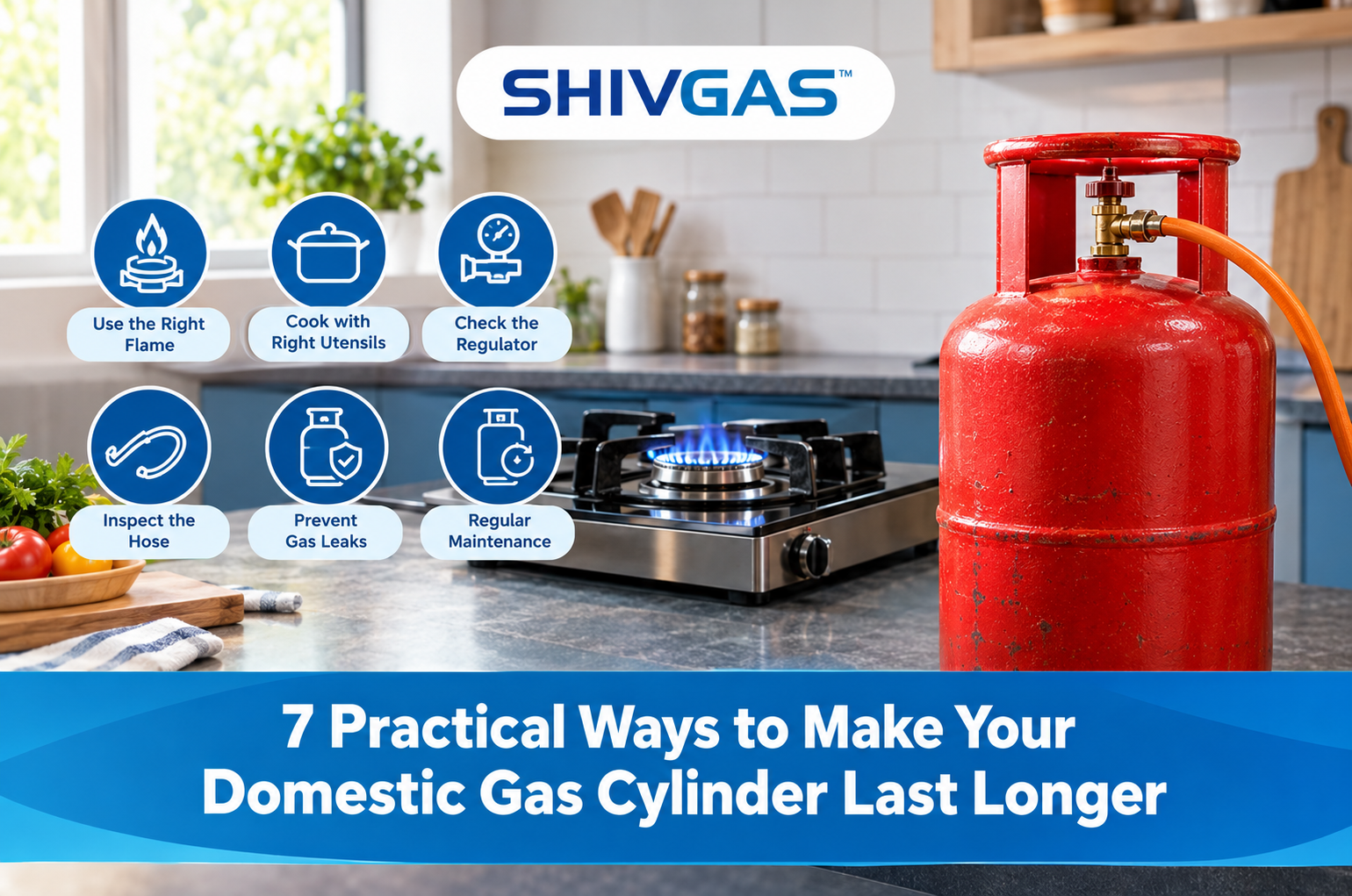
So, here are seven practical ways to make your LPG cylinder last longer and avoid unnecessary gas consumption.
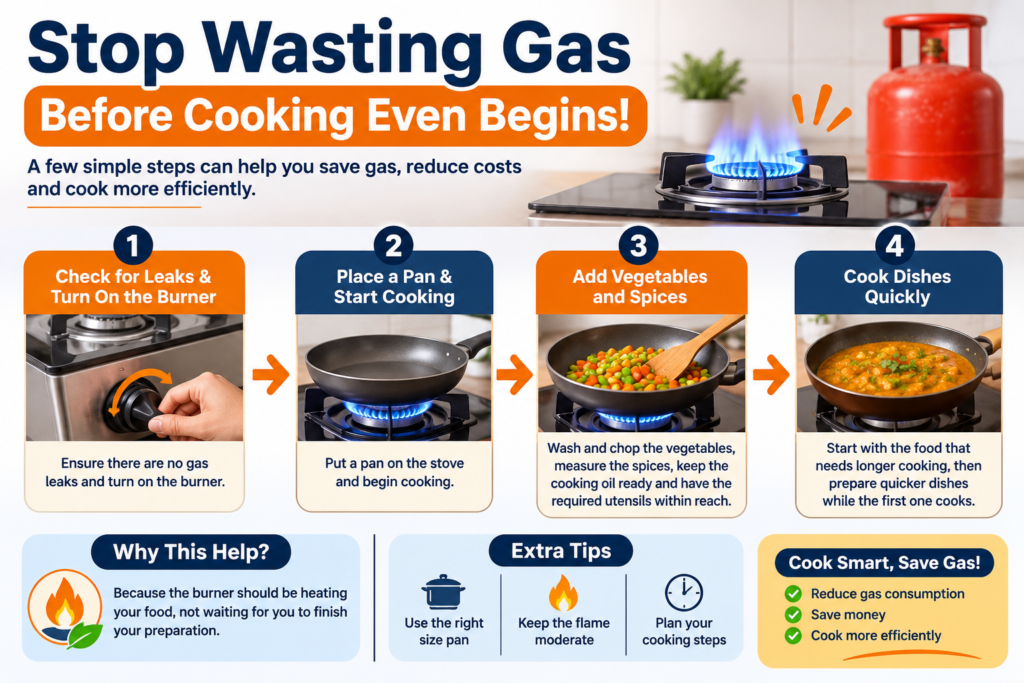
Here is a common kitchen mistake. You turn on the burner, place a pan on the stove, and then start chopping vegetables or searching for spices. Meanwhile, the flame keeps burning.
Sound familiar? Then this is the first habit you need to change.
Before lighting the stove, prepare everything you need. Wash and chop the vegetables, measure the spices, keep the cooking oil ready and place the required utensils within reach.
Why does this help? Because the burner should be heating your food, not waiting for you to finish your preparation.
You can also arrange dishes according to their cooking time. Start with the food that needs longer cooking, then prepare quicker dishes while the first one cooks.
Many people believe that a high flame cooks food faster. But that is not always true.
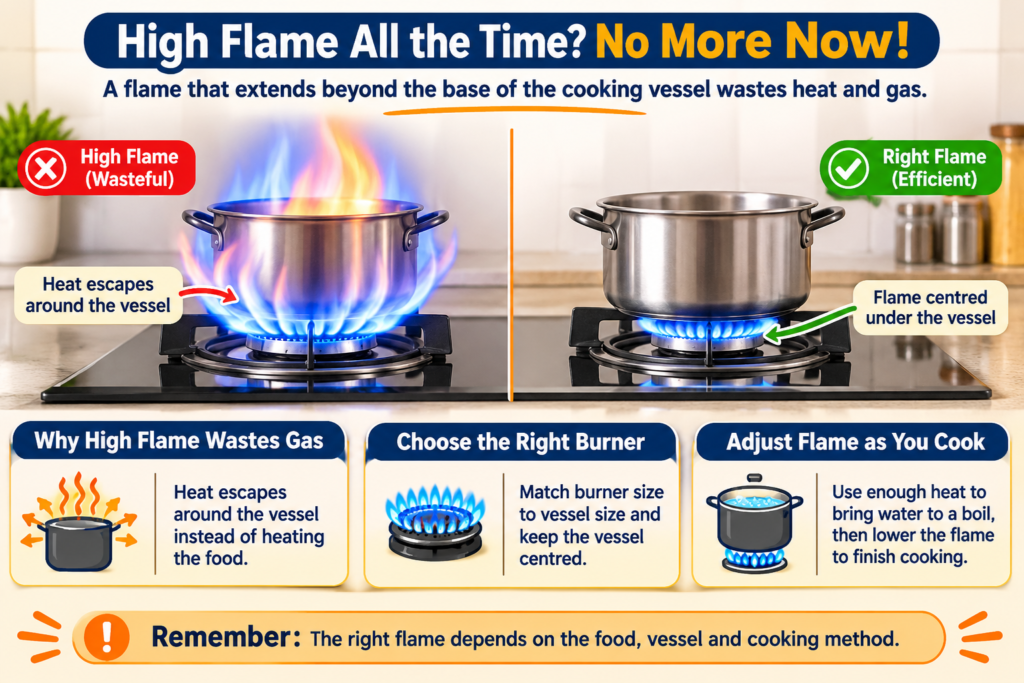
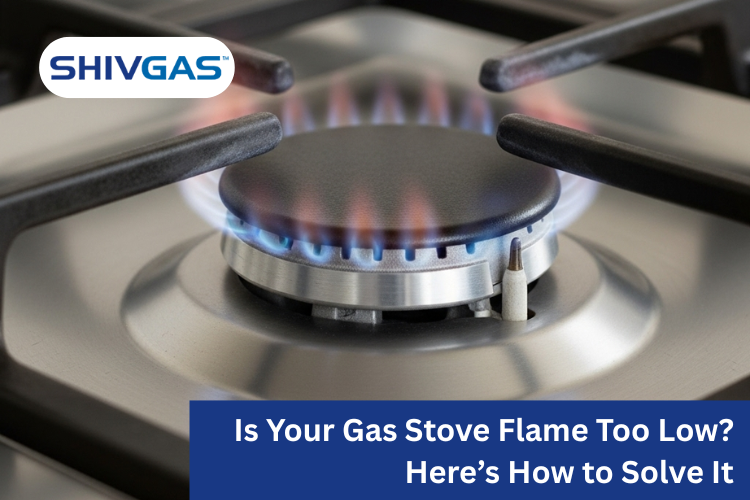
Look at the flame under your cooking vessel. Does it extend beyond the base and rise around the sides? If it does, some of the heat escapes into the surrounding air instead of heating your food.
That means you may be using extra gas without getting the cooking results you expect.
The solution is simple. Choose a burner that suits the size of your vessel. Keep the vessel centred and adjust the flame according to the dish.
For example, when you boil water for rice, you need enough heat to bring it to a boil. Once boiling starts, you can usually lower the flame to finish cooking.
Remember, the right flame depends on the food, the vessel and the cooking method.
Here is another habit worth checking. When you cook rice, boil water or prepare vegetables, do you leave the vessel uncovered?
If the recipe allows it, use a suitable lid.
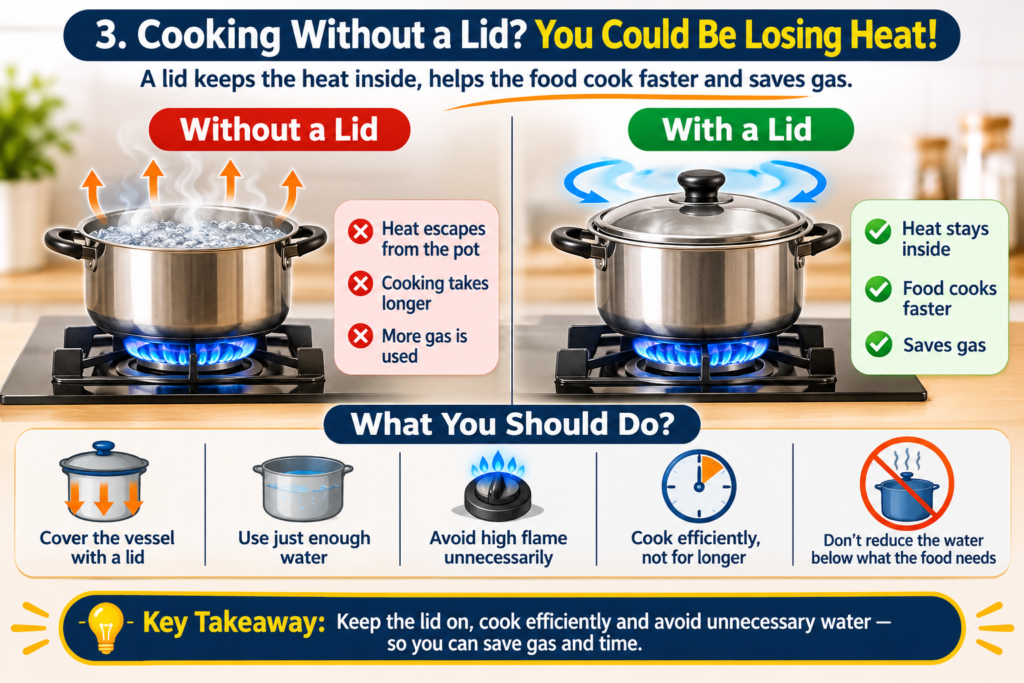
An uncovered vessel releases steam and loses heat through its open surface. A lid helps retain heat and can shorten cooking time for many everyday dishes.
Now, let’s talk about water.
Suppose you add much more water than a recipe requires. That extra water also needs to heat up. If you later need to boil it away, your burner stays on for longer.
So, what should you do?
Measure the water according to the recipe. Cover the vessel when suitable, and avoid adding unnecessary water.
But do not reduce the water below what the food needs. The goal is to cook efficiently, not compromise the quality of your meal.
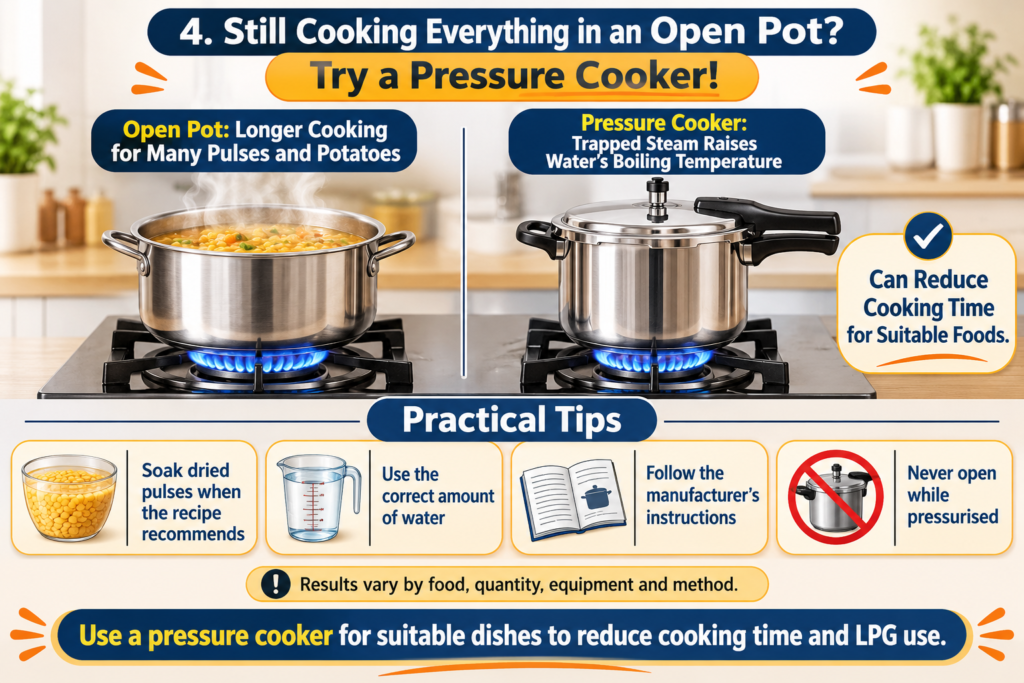
Let’s talk about foods that take a long time to cook.
Chickpeas, beans, lentils and potatoes can require extended cooking on an open burner. If you prepare these foods regularly, a pressure cooker may help you reduce cooking time.
How does it work?
A pressure cooker traps steam inside a sealed vessel. The pressure raises the boiling temperature of water, allowing suitable foods to cook faster than they would in an ordinary pot.
You can also soak dried pulses before cooking when the recipe calls for it. This may reduce their cooking time, depending on the type of pulse and preparation method.
However, remember one important point: use the correct amount of water, follow the manufacturer’s instructions and never open the cooker while it remains pressurised.
A pressure cooker will not produce the same savings for every dish. The results depend on the food, quantity, equipment and cooking method.
Still, when you use it for suitable foods, it can help reduce the time your LPG cylinder spends supplying heat.
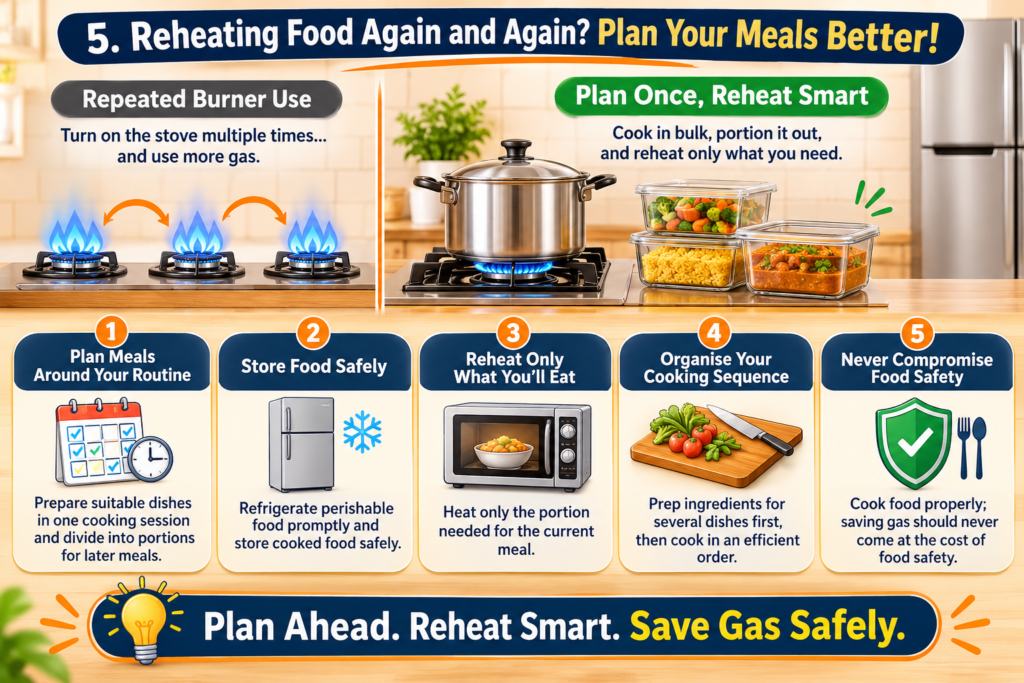
You prepare lunch, heat a small portion later, and then switch on the stove again for dinner. If this happens every day, the additional burner time can add up.
So, here is a proven alternative.
Plan your meals around your household’s routine. Where appropriate, prepare suitable dishes in one session and divide them into portions for later meals.
Store cooked food safely and refrigerate perishable items promptly. When you need a meal, reheat only the portion you plan to eat.
You can also organise your cooking sequence. Prepare ingredients for several dishes first, then cook them in an order that makes good use of your time.
But do not switch off the burner before food has cooked properly. Saving gas should never come at the cost of food safety.
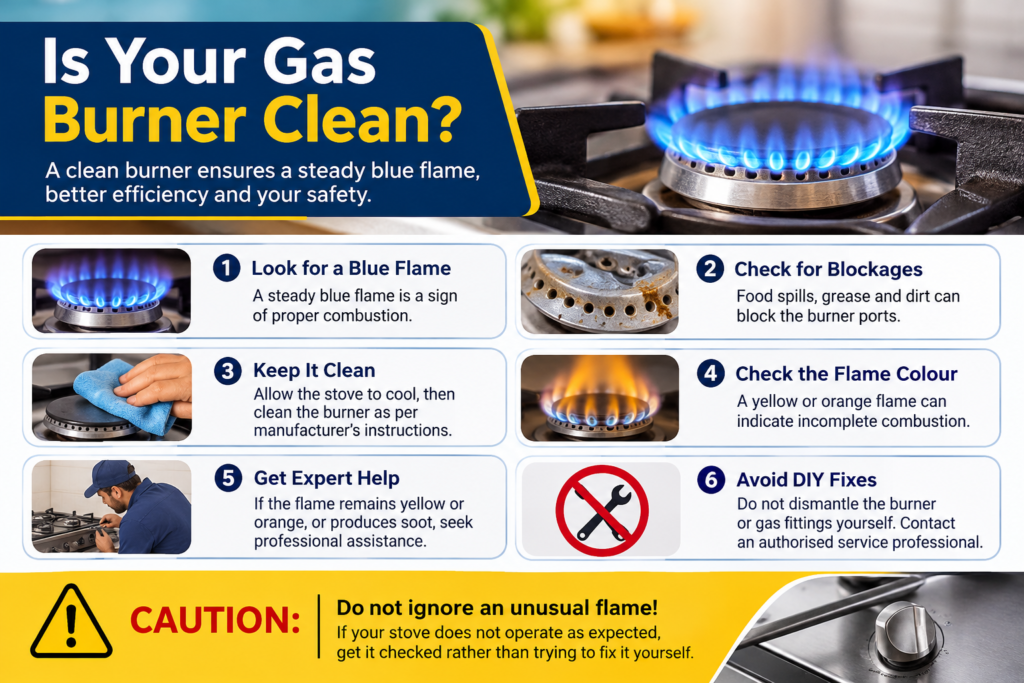
You may follow every cooking tip and still notice an unusual flame. What should you check next?
Start by taking a close look at the cleanliness of the burner.
Food spills, grease and dirt can block the burner ports. This may lead to an uneven flame or poor combustion.
Allow the stove to cool before cleaning it. Follow the manufacturer’s instructions, and make sure removable burner parts are completely dry before putting them back.
Now, check the flame when you use the stove.
A steady blue flame is generally a useful sign of proper combustion. If the flame remains yellow or orange, produces soot or burns unevenly, the appliance may need professional attention.
Do not dismantle the burner or gas fittings yourself. Contact an authorised service professional if the problem continues.
CAUTION: Do not ignore an unusual flame! If your stove does not operate as expected, get it checked rather than trying to fix it yourself.
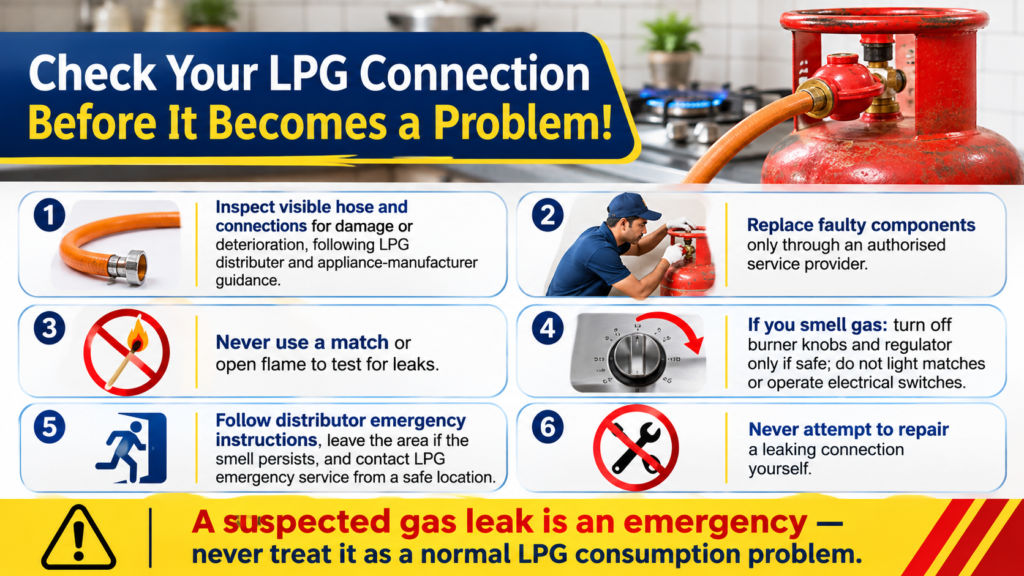
This final point is not just about saving fuel. It is about keeping your kitchen safe.
Check the visible hose and connections according to the guidance provided by your LPG distributor and appliance manufacturer. Look for signs of damage or deterioration, and arrange for an authorised service provider to replace faulty components.
Never use a match or open flame to check for gas leakage.
What if you smell gas?
Turn off the burner knobs and regulator if it is safe to do so. Do not light matches or operate electrical switches. Follow your distributor’s emergency instructions, leave the area if the smell persists and contact the LPG emergency service from a safe location.
Never attempt to repair a leaking connection yourself.
Remember, a suspected gas leak is an emergency. It should never be treated as a normal LPG consumption problem.
Now that you know what to change, how do you check whether your efforts are helping?
Start by recording the date when you connect a full cylinder and the date when it becomes empty. Repeat this over several comparable periods.
Keep in mind that LPG consumption depends on the number of people in your household, the food you prepare, the frequency of cooking and the amount of food you make.
One cylinder may last longer than another simply because your household cooked fewer meals during that period.
Avoid guessing the remaining gas by shaking or heating the cylinder. Never tamper with its valve.
If your domestic LPG cylinder runs out much sooner than expected, contact your distributor or an authorised technician to inspect the appliance and connections.
You do not need expensive kitchen equipment or a complete change in your cooking habits to use LPG more efficiently.
Start with the basics. Prepare ingredients before lighting the stove, lower the flame when appropriate, cover cooking vessels, use a pressure cooker for suitable foods and avoid unnecessary reheating.
Keep your burner clean and pay attention to the condition of your gas connection.
These habits can help reduce avoidable LPG cylinder consumption, although the amount saved will vary from one household to another.
So, the next time you cook, pay attention to how you use the flame. A few thoughtful changes can make your cooking routine easier and help your domestic LPG cylinder last longer.
Prepare ingredients before lighting the stove, use a suitable flame, cover vessels when appropriate and plan meals to reduce repeated heating. These habits can help reduce unnecessary gas consumption.
A high flame consumes gas at a higher rate, but it does not always cook food faster. If the flame extends beyond the vessel base, some heat escapes instead of heating the food.
A pressure cooker can reduce cooking time for suitable foods. Actual savings depend on the recipe, quantity, equipment and cooking method.
Blocked burner ports can cause an uneven flame or poor combustion. Clean the burner according to the manufacturer’s instructions and contact an authorised service professional if the flame remains abnormal.
Record the dates when you connect and finish each cylinder. Compare periods with similar cooking routines, household sizes and meal requirements to understand changes in consumption.




Comment (0)