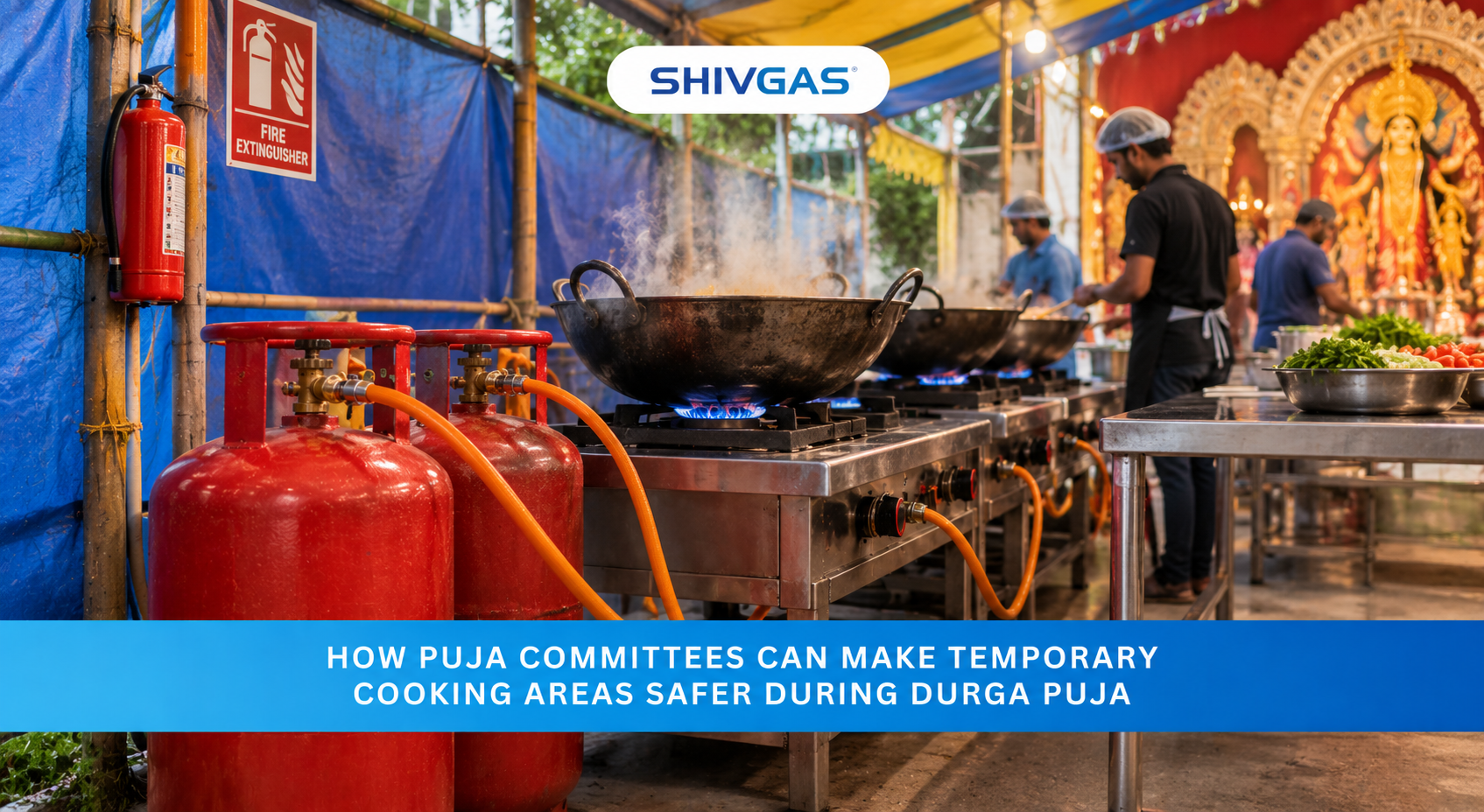
During Durga Puja, a temporary kitchen can become one of the busiest areas of a pandal. Food has to be prepared for volunteers, workers, visitors, and sometimes large community gatherings. With several burners running, LPG cylinders stored nearby, and people moving in and out, a cooking area that looks temporary still needs the same attention to safety as a permanent kitchen.
This is where safe LPG usage becomes important.
A puja committee may arrange a cooking area for only a few days, but LPG does not become less hazardous because the setup is temporary. The cylinders, regulators, hoses, burners, ventilation, storage area, and people handling them all need proper attention.
The good part is that most risks can be reduced through basic planning. A committee does not need an elaborate kitchen. It needs a sensible LPG setup, trained people, adequate space, and clear rules about how the cooking area should operate.
The location of the cylinders should be decided before cooking begins. Keeping cylinders beside a busy burner because it is convenient can create an unnecessary risk.
Cylinders should remain upright on a stable surface and away from direct heat, open flames, and areas where people or vehicles can knock them over. The storage and cooking arrangement should also allow people to reach the cylinders and shut off the supply without having to move through a crowded cooking area.
The cylinder area should remain dry and reasonably protected from rain. At the same time, it should have adequate ventilation. LPG should never be stored in a poorly ventilated enclosed space such as a locked room, underground area, or pit.
For a large puja kitchen, it also helps to separate the cylinder area from the main cooking line. This gives cooks enough working space and reduces unnecessary movement around the cylinders.
A temporary kitchen needs more planning than simply placing a few burners on a table.
Start with the cooking layout. Keep sufficient space between burners so that large utensils do not interfere with neighbouring flames. Place cooking equipment on a stable, level surface and keep combustible materials away from the flame.
The LPG hose should have a clear route from the regulator to the appliance. It should not pass across a walkway where people can step on it, pull it, or damage it. Avoid placing the hose close to hot surfaces.
Ventilation deserves particular attention during temporary events. Multiple burners consume LPG and produce combustion gases. A cooking area needs adequate airflow so that combustion products do not accumulate.
If the kitchen operates inside a temporary enclosure, do not seal the space simply to protect it from rain or wind. The arrangement should allow sufficient ventilation while keeping the cooking equipment protected from the weather.
A short inspection before the first meal can prevent problems later. The person responsible for the kitchen should check the complete LPG setup rather than looking at the cylinder alone.
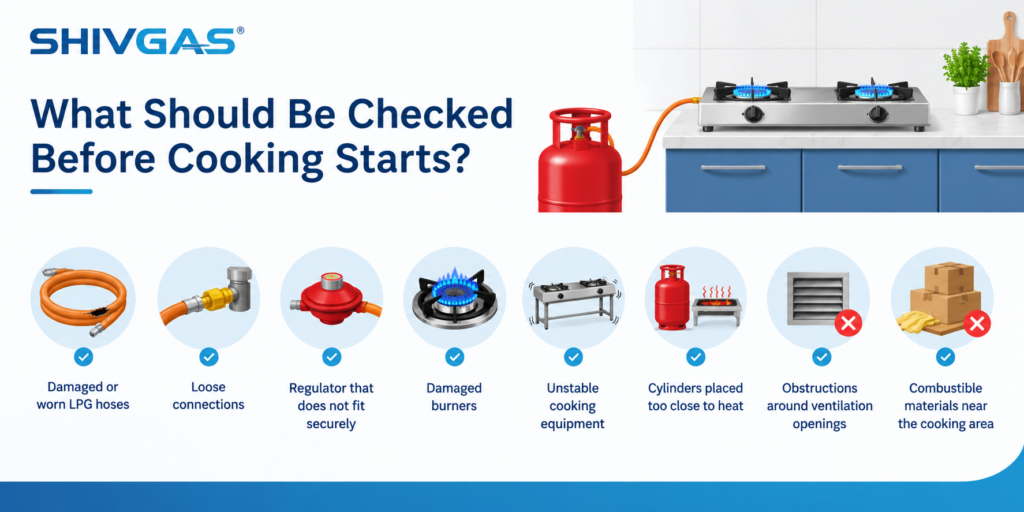
The cylinder itself should also be checked for visible damage or abnormal condition. Do not use a cylinder or component that appears damaged. Ask the authorised LPG distributor or qualified service personnel to inspect it.
Conducting a simple pre-use check becomes even more important when the kitchen uses several cylinders or operates for long hours.
Not everyone working at the pandal needs to handle LPG equipment.
A committee should assign responsibility to a small group of people who understand the basic operating and safety procedures. They should know where the cylinder valves are located, how the cooking equipment operates, and what to do if they smell gas or notice an abnormal flame.
This becomes particularly important during busy meal preparation. Volunteers may change shifts, cooks may leave temporarily, and new people may enter the kitchen. Without clear responsibility, nobody may notice a problem until it becomes serious.
A designated person can also check the kitchen at regular intervals and confirm that burners are switched off when cooking stops.
A gas leak can become dangerous when LPG accumulates in an enclosed or poorly ventilated area and encounters an ignition source.
The first step is prevention. Connections, hoses, regulators, and appliances should remain in good condition. People should never use a damaged hose or attempt an improvised connection to keep the kitchen running.
If anyone smells LPG, the response should be immediate. Do not light a match, operate electrical switches, or create any other possible source of ignition. Move people away from the affected area and shut off the LPG supply only if it can be done safely.
The committee should then contact the authorised LPG supplier or emergency service as appropriate. Nobody should attempt to locate or repair a suspected leak without the necessary training.
A safe LPG usage protocol comes down to disciplined habits.
Before lighting a burner, make sure the cooking area is clear and the appliance is in proper condition. Never leave an active burner unattended, especially when large quantities of food are being prepared.
Keep cloth, paper, packaging, plastic containers, and other combustible materials away from the flame. Long cooking sessions also require attention because heat can build up around the cooking equipment.
When cooking finishes, turn off the appliance and close the LPG supply according to the equipment’s operating procedure. Do not assume that switching off the burner alone is enough.
The person responsible for the kitchen should make a final check after cooking ends, particularly before the area is closed for the night.
A community kitchen can consume much more LPG than a household kitchen. Estimating the requirement in advance helps the committee plan its commercial LPG supply instead of arranging cylinders at the last minute.
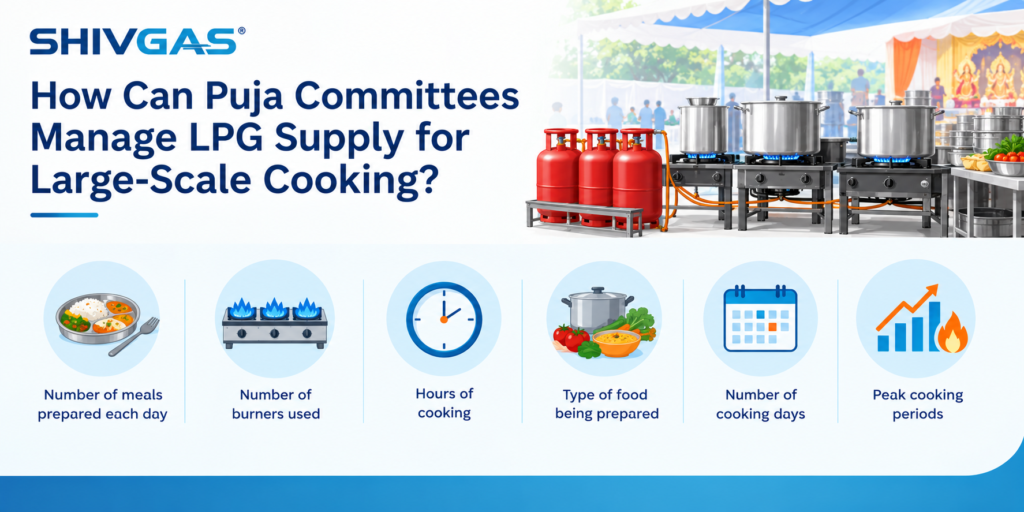
A kitchen preparing meals for hundreds of people will have different requirements from a small tea or snack counter. The committee should discuss its expected consumption with the authorised LPG supplier and choose an appropriate supply arrangement.
Food stalls create another challenge because cooking and public movement happen in close proximity.
Whether the stall sells tea, fried snacks, meals, or sweets, LPG supply for food stalls needs careful planning. Cylinders should not obstruct customer pathways or sit in locations where they can be struck by carts, equipment, or crowds.
The cooking flame should also remain separated from packaging, decorative materials, plastic items, and other combustible products used at the stall.
Each stall operator should know who is responsible for the LPG connection and what action to take if a leak or equipment problem occurs. The committee can make this part of the stall allocation process instead of addressing safety only after the stalls open.
If LPG is suspected to be leaking, treat it as an emergency rather than trying to continue cooking.
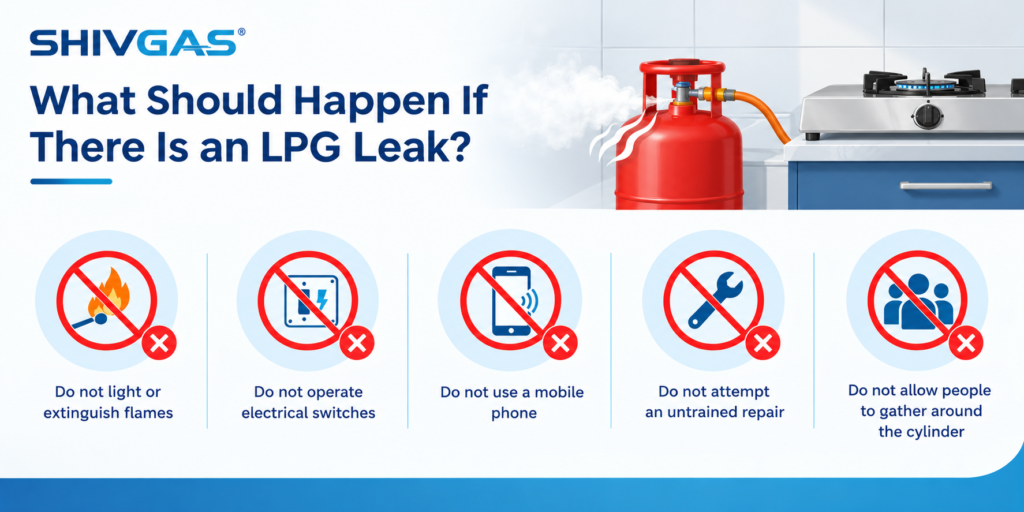
If it is safe to do so, shut off the LPG supply and move people away from the area. Keep ignition sources away and contact the appropriate LPG emergency service or authorised supplier.
The exact response can depend on the location and severity of the leak, so every committee should keep emergency contact details accessible before the event begins.
Preparation should happen before the first cooking shift.
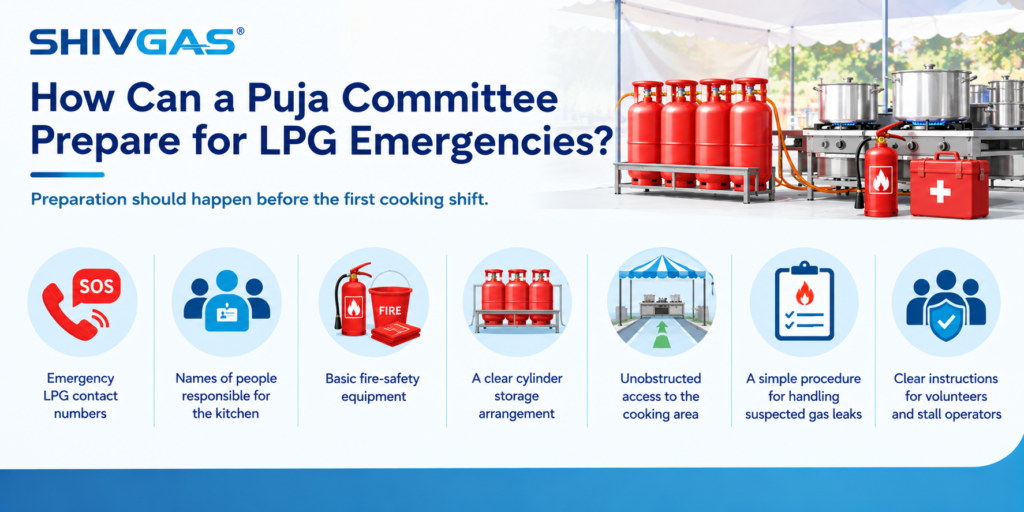
A temporary Durga Puja kitchen may operate for only a few days, but it can handle a large amount of cooking in a short period. That combination makes LPG planning worth taking seriously.
Safe LPG usage starts before the first burner is lit. The committee needs a suitable cylinder arrangement, proper ventilation, sound equipment, trained handlers, and a reliable commercial LPG supply. Food stalls need the same level of attention, particularly when LPG supply for food stalls operates close to large crowds.
Proper planning keeps LPG cylinders and equipment in safe locations, gives cooks enough space to work without obstruction, and helps everyone understand what to do in case of a leak, fire, or other emergency.
The appropriate LPG arrangement depends on the nature and scale of the cooking operation and applicable local requirements. A committee should discuss its setup with an authorised LPG supplier rather than assuming that household LPG arrangements are suitable for commercial-scale cooking.
Keep cylinders upright on a stable surface in a dry, ventilated location away from heat, flames, and busy pedestrian routes. Avoid enclosed or low-lying areas where leaked LPG could accumulate.
The cylinder arrangement should follow applicable safety requirements and allow adequate ventilation. Cylinders should not be placed in confined or poorly ventilated spaces.
They should avoid flames, sparks, and electrical switches, move people away from the affected area, and shut off the LPG supply only if it is safe to do so. The authorised LPG supplier or appropriate emergency service should then be contacted.
Keep cylinders stable and away from customers, decorative materials, and other combustible items. Use suitable equipment, keep hoses protected from damage, and make sure stall operators know the procedure for a suspected leak.



Comment (0)