
A gas stove can develop problems over time, from weak flames and ignition failures to gas leaks and uneven heating. While these issues may seem minor at first, ignoring them can affect cooking performance and create serious safety risks.
Knowing the common gas stove problems, their possible causes, and the right fixes can help you identify warning signs early and avoid costly repairs. In this guide, we cover seven common gas stove problems along with practical solutions to keep your stove working safely and efficiently.
Here are 7 common gas stove problems and practical ideas to fix them. The solutions will guide you in understanding when a problem can be handled at home and when you should contact a gas service professional.
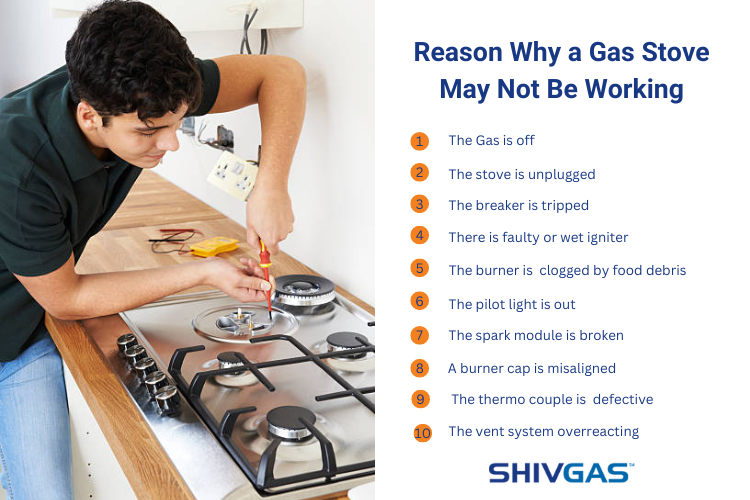
One of the most common gas stove problems is when the burner does not light even after turning the knob. In many cases, you may hear a clicking sound but see no flame. Sometimes, there is no clicking sound at all.
This usually happens due to blocked burner holes, a faulty ignition system, or interrupted gas flow.
Turn off the stove completely and allow it to cool. Remove the burner cap and check for food spills or grease blocking the burner holes. Clean the burner gently using warm water and a soft scrub. Dry it properly before placing it back.
If the ignition still does not work, try lighting the burner with a matchstick. If that works, the issue may be with the ignition system. If neither method works, stop using the stove and contact your gas service provider for inspection.
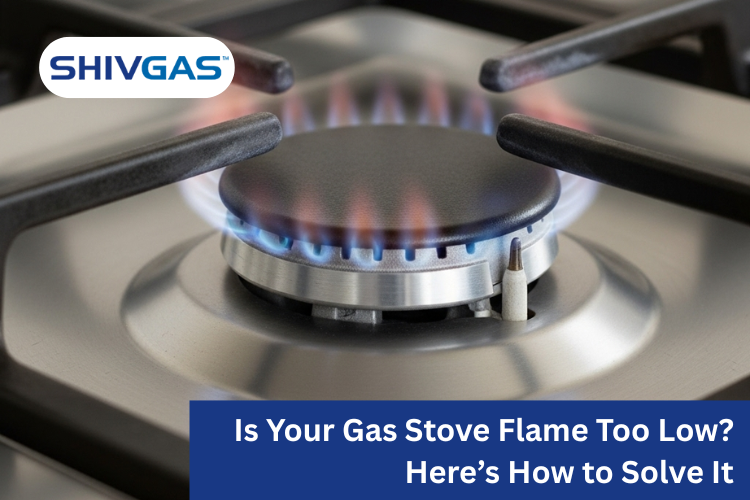
A low gas flame is another common gas stove issue. Low gas flame problem leads to slow cooking, uneven heating, and higher gas consumption. Many users assume the gas cylinder is empty, but the real cause is often blocked burner holes or regulator issues.
Remove the burner and soak it in warm soapy water for about 30 minutes. This helps loosen grease and food residue. Clean the holes gently and dry the burner thoroughly.
If the flame remains low even after cleaning, check the gas regulator and hose for blockages. If the problem continues, professional servicing may be required, especially if internal parts are affected.
A proper working gas stove flame should always be blue. A yellow or orange flame is a sign of incomplete combustion, which can reduce cooking efficiency and release harmful gases.
This problem usually occurs due to dirt buildup on the burner or an improper air and gas mixture.
Clean the burner thoroughly and ensure it is placed correctly. Make sure the burner ports are not blocked or clogged. If your stove has an adjustable air shutter, slightly increase the air intake.
If the flame colour does not return to blue, stop using the stove and arrange professional servicing to prevent long-term safety risks.
A gas smell is a serious issue and should never be taken casually. It usually indicates that the gas leak might have taken place from the hose, regulator, or stove connection.
Immediately turn off the gas supply and open all windows and doors to ventilate the area. Do not use electrical switches or lighters.
Check the hose and connections using soapy water. If you see bubbles forming, it indicates a leak. Tighten loose connections if possible. If the smell persists, contact your nearest LPG gas agency or service professional immediately. Do not attempt to repair yourself in this situation.
Sometimes, the burner flame makes a loud hissing or roaring sound while burning. This happens mainly due to excessive gas flow or too much air mixing with the gas.
You must make sure that the burner cap is properly placed. Misalignment often causes uneven airflow. If your stove has the facility of air adjustment, reduce the air intake slightly and test the flame.
If you notice that your gas stove knob is becoming difficult to turn, it is not something you should ignore. A knob should always move smoothly. When it starts to feel tight, stiff, or jammed, it usually means something is wrong inside.
Grease from cooking, food spills, and dust slowly settle around the knob and seep into the inner mechanism. As this buildup increases, it restricts the smooth movement of the knob. In some cases, moisture or regular wear can also affect the internal gas valve, making the knob harder to rotate.
Start by gently removing the knob from the stove. Clean the knob and the surrounding area using a mild degreaser or warm soapy water to remove grease and dirt buildup. Make sure the area is completely dry before placing the knob back.
After cleaning, turn the knob slowly to check if it moves smoothly. If it still feels tight, stiff, or uneven, do not force it. Forcing a jammed knob can damage the internal valve and increase the risk of gas leakage.
If the problem remains after basic cleaning, stop using that burner and contact a qualified gas service professional. In such cases, internal inspection or part replacement may be necessary to restore safe operation.
If your gas stove flame keeps going out while you are cooking, it is definitely a safety concern that should not be ignored. This problem usually occurs when the gas supply is not steady or when the burner is not working properly.
Common causes include moisture trapped inside the burner after cleaning, incorrect placement of the burner cap, or restricted airflow around the flame. Using oversized utensils that cover the burner completely can also disturb the flame and cause it to extinguish.
When this issue happens repeatedly, it is a sign that the burner is not maintaining stable combustion
Turn off the stove and let the burner cool down. Remove the burner cap and make sure it is fully dry, as even small amounts of moisture can cause the flame to go out. Place the burner and cap back properly, ensuring that it sits evenly and is not tilted.
Next, check that the gas regulator and hose are firmly connected and positioned correctly. A loose or partially connected regulator can interrupt gas flow and cause the flame to extinguish.
While cooking, use vessels that match the burner size. Oversized utensils can block airflow around the flame, making it unstable and more likely to go off.
If the flame continues to turn off even after these checks, stop using the burner. This may indicate an internal gas supply or valve issue that should only be handled by a trained gas service professional.
Most gas stove problems do not appear suddenly. They begin with small signs such as a weak flame, delayed ignition, unusual noise, or a faint gas smell. When these signs are ignored, the problem can grow into a serious safety risk that affects your kitchen.
So, it is important that you are aware of the common gas stove problems and respond early to them before something serious happens. If an LPG gas stove problem does not resolve with basic checks, it is always safer to stop using the stove and contact your nearest LPG gas agency without taking safety into your own hands.
The most common reasons for a low flame on an LPG gas stove are: clogged burner holes (food debris), a faulty or worn-out regulator, a near-empty cylinder, or a blocked gas hose. Start by cleaning the burner caps and ports with warm water and a soft brush. If the problem persists, check or replace the regulator.
Turn off the stove completely and let it cool. Remove the burner cap and check for blocked ports or food debris. Clean gently with warm water and dry thoroughly. Try relighting with a matchstick. If it still does not light, the ignition electrode may be faulty or the gas jet may be blocked — contact your gas service provider.
According to vastu shastra, a 3-burner gas stove is considered fine as long as it is placed in the south-east direction of the kitchen (the fire zone). The cook should face east while cooking. Avoid placing the stove directly opposite the sink or refrigerator.
The air shutter is a small adjustable opening beneath the burner that controls the air-to-gas ratio. If your flame is yellow or orange (indicating incomplete combustion), locate the air shutter and open it gradually while observing the flame. For LPG, keep it about half open until the flame turns blue. Never fully close the air shutter.






Comment (0)