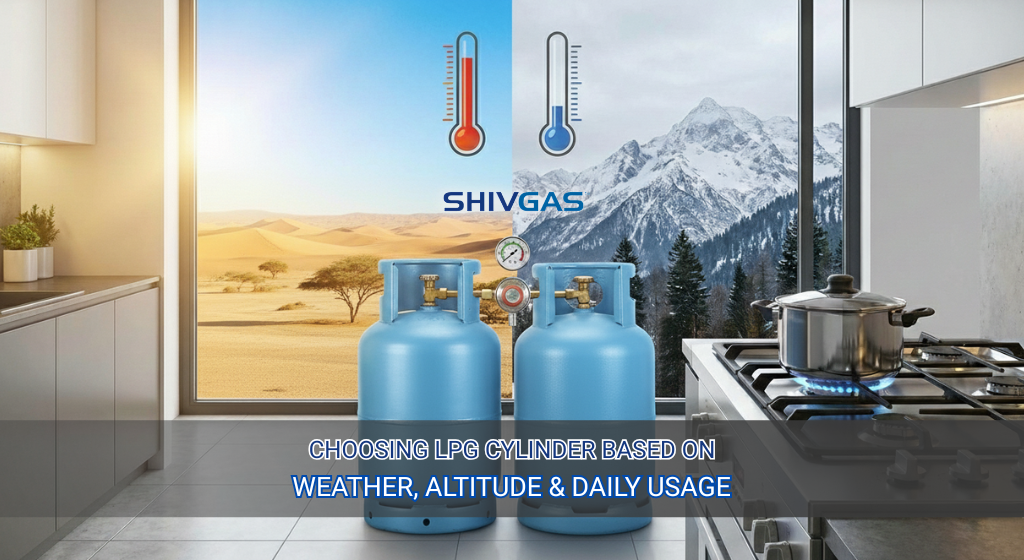
When you use an LPG cylinder at home, you expect it to provide enough gas for everyday cooking. But did you know that weather and location can affect how LPG works?
Cold weather can make it harder for LPG to turn into gas, which may reduce the flame. In hot weather, the pressure inside the cylinder increases. At high altitudes, lower oxygen levels can also affect how the gas burns.
However, choosing the right LPG gas cylinder depends on more than the weather. You also need to consider your daily gas consumption, cylinder size, safety and the service provided by your gas supplier.
In this blog, we will explain how weather and altitude affect LPG use, which cylinder sizes suit different needs, and how to store and use an LPG cylinder safely.
LPG is stored as a liquid inside a sealed cylinder. When you turn on your gas stove, some of the liquid changes into gas and flows to the burner.
Temperature affects this process. In cold weather, LPG turns into gas more slowly. This can make the flame weak, especially when you use several burners at the same time.
In hot weather, the pressure inside the cylinder increases. That is why you should keep your cylinder away from direct sunlight, stoves and other heat sources.
High-altitude areas have another challenge. The air contains less oxygen at higher elevations, which can affect how LPG burns. If your flame turns yellow or leaves black marks on your utensils, ask a qualified technician to check your stove.
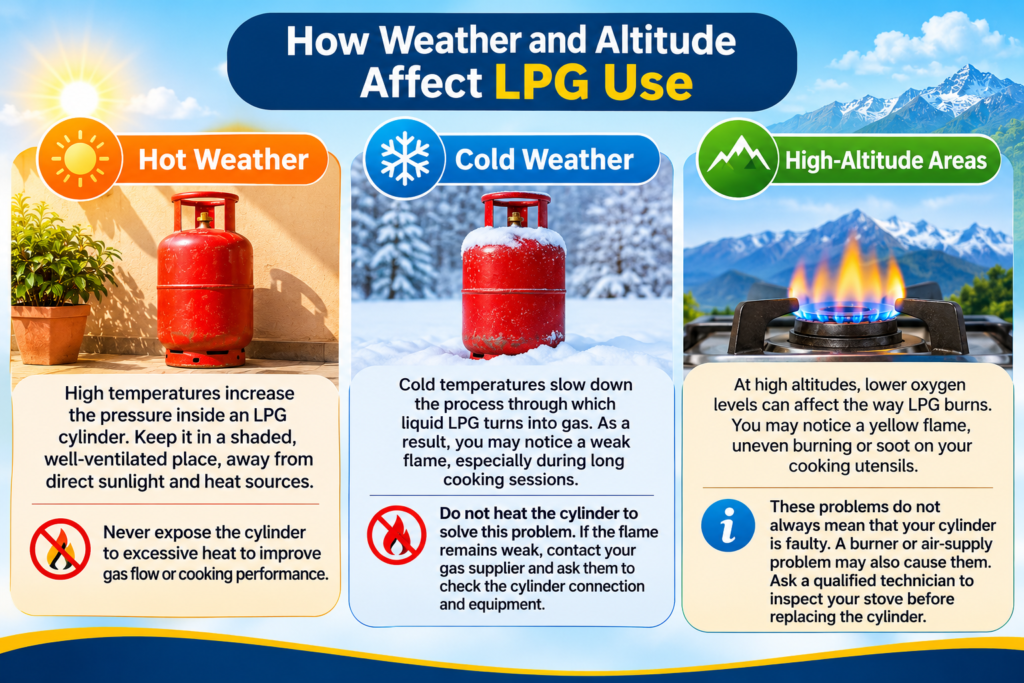
High temperatures increase the pressure inside an LPG gas cylinder. Keep the cylinder in a shaded, well-ventilated place, away from direct sunlight and heat sources.
Never expose the cylinder to excessive heat to improve gas flow or cooking performance.
Cold temperatures slow down the process through which liquid LPG turns into gas. As a result, you may notice a weak flame, especially during long cooking sessions.
Do not heat the cylinder to solve this problem. If the flame remains weak, contact your gas supplier and ask them to check the cylinder connection and equipment.
At high altitudes, lower oxygen levels can affect the way LPG burns. You may notice a yellow flame, uneven burning or soot on your cooking utensils.
These problems do not always mean that your cylinder is faulty. A burner or air-supply problem may also cause them. Ask a qualified technician to inspect your stove before replacing the cylinder.
LPG cylinders come in different sizes and designs. Your choice should depend on how much gas you use, the type of connection you have and the cylinder options available in your area.
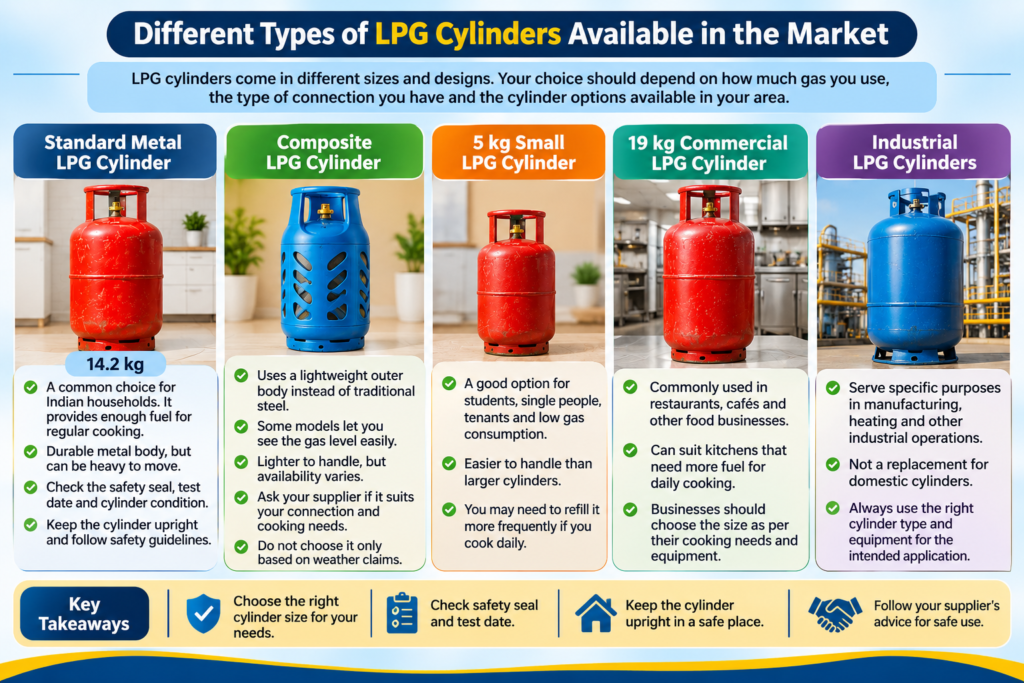
The 14.2 kg domestic LPG cylinder is a common choice for Indian households. It provides enough fuel for regular cooking in most families.
Its metal body is durable, but the cylinder can be heavy to move. Check the safety seal, test date and cylinder condition when you receive a refill.
Keep the cylinder upright and follow your supplier’s instructions for safe use and storage.
Composite LPG cylinders use a lightweight outer body instead of the traditional steel design. Some models also let you see the gas level more easily.
Their lighter weight makes them easier to handle. However, availability and approved uses vary by supplier and location. Ask your gas supplier whether a composite cylinder suits your connection and cooking needs.
Do not choose a composite cylinder based only on claims about its performance in hot or cold weather.
A 5 kg LPG cylinder can be a good option for students, people who live alone, tenants and households with low gas consumption.
It is easier to handle than a larger cylinder. However, you may need to refill it more frequently if you cook every day.
Restaurants, cafés and other food businesses commonly use 19 kg commercial LPG cylinders.
This size can suit kitchens that need more fuel for daily cooking. Businesses should choose their cooking gas cylinder capacity according to their cooking requirements and the equipment approved for their setup.
Industrial LPG cylinders serve specific purposes in manufacturing, heating and other industrial operations.
They are not a replacement for domestic LPG cylinders. Always use the cylinder type and equipment approved for the intended application.
Weather is only one factor to consider when choosing an LPG cylinder. You should also check the cylinder’s safety, size, equipment compatibility and delivery service.
Before accepting a cylinder, check that the safety seal is intact and the cylinder has clear identification markings.
Look for visible damage, heavy rust or signs of tampering. Check the test date and ask your supplier if you have any doubts about the cylinder’s condition.
Never use a cylinder that appears damaged or unsafe.
Steel and composite cylinders have different designs and handling features.
Instead of choosing a cylinder based only on the weather, ask your authorised supplier which types are approved for your connection and suitable for your location.
The cylinder must meet the required safety standards and work with your approved LPG setup.
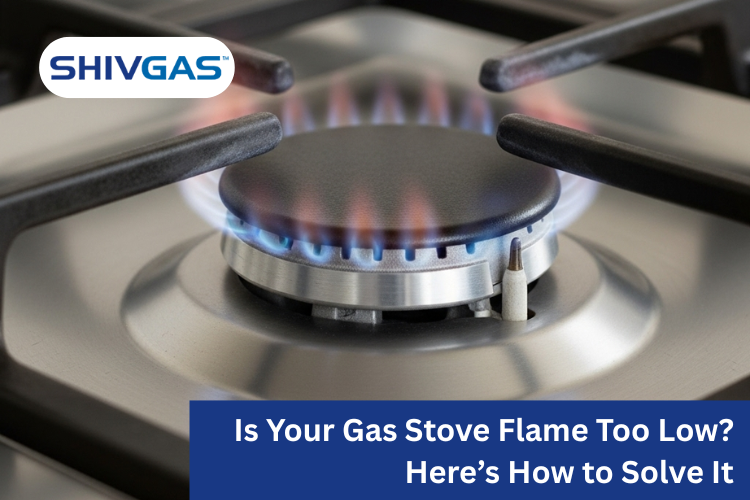
A steady blue flame is a useful sign that your stove is burning LPG properly.
A weak, yellow or uneven flame may indicate a problem with the burner, regulator or air supply. Do not try to fix the regulator yourself.
If the flame changes suddenly or leaves soot on your utensils, stop using the appliance if you suspect a fault and arrange an inspection by a qualified technician.
Your daily LPG consumption should guide your choice of cylinder size.
A 5 kg cylinder may suit someone who cooks occasionally or uses less gas. A 14.2 kg cooking gas cylinder is a common option for families that cook every day. A 19 kg LPG gas cylinder generally serves commercial kitchens and other approved applications.
Choosing the right size can reduce the number of refill bookings you need. However, a larger cylinder will not automatically fix a weak flame or a faulty regulator.
A reliable supplier makes it easier to manage your LPG needs. This is especially important in remote and hilly areas, where road conditions can delay deliveries.
Before choosing a supplier, check whether they offer convenient booking options, timely refills and support when you face a problem with your cylinder.
A dependable delivery service can help you avoid running out of gas when you need it most.
The regulator controls the gas supply from the cylinder to your stove. The hose carries the gas to the appliance.
Both parts must be in good condition. Look for cracks, damaged fittings or other visible signs of wear. Use only approved equipment and arrange replacement through your supplier or a qualified technician.
Never try to repair a damaged regulator or hose yourself.
Your stove, regulator and cylinder connection must be compatible.
If your flame becomes weak in winter or changes colour, do not assume that you need a new cylinder. Ask your gas supplier or a qualified technician to inspect the equipment and identify the problem.
Choosing the right cylinder is only one part of safe LPG use. Proper storage and handling are just as important.
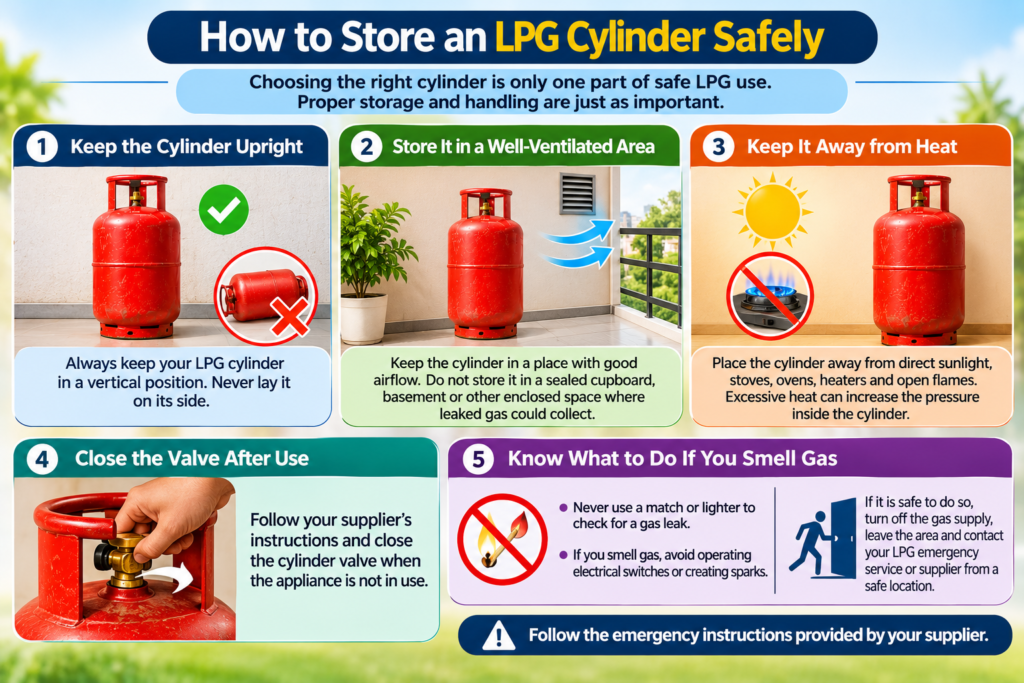
Always keep your LPG cylinder in a vertical position. Never lay it on its side.
Keep the cylinder in a place with good airflow. Do not store it in a sealed cupboard, basement or other enclosed space where leaked gas could collect.
Place the cylinder away from direct sunlight, stoves, ovens, heaters and open flames. Excessive heat can increase the pressure inside the cylinder.
Follow your supplier’s instructions and close the cylinder valve when the appliance is not in use.
Never use a match or lighter to check for a gas leak.
If you smell gas, avoid operating electrical switches or creating sparks. If it is safe to do so, turn off the gas supply, leave the area and contact your LPG emergency service or supplier from a safe location.
Follow the emergency instructions provided by your supplier.
Read more: LPG Production, Storage and Delivery: All You Need to Know
Choosing an LPG cylinder does not have to be complicated. You need to consider your daily gas use, the weather in your area, the type of connection you have and the condition of your cooking equipment.
A 5 kg cylinder may suit a small household with low gas consumption, while a 14.2 kg cylinder works well for many families. Commercial kitchens may need a larger capacity.
However, cylinder size alone does not determine flame quality. If your flame becomes weak or turns yellow, ask a qualified technician to check your stove and gas connection.
Always choose an approved cylinder, store it safely and follow your gas supplier’s instructions. These simple steps will help you use LPG safely and manage your household cooking needs.
Yes, provided the cylinder is approved and handled correctly. Keep it upright in a shaded, well-ventilated place, away from heat sources. Follow your supplier’s safety instructions.
Cold weather can slow the process through which LPG turns into gas. However, a weak flame can also indicate a problem with the regulator, hose or burner. Do not heat the cylinder. Contact your supplier if the problem continues.
Not necessarily. Lower oxygen levels can affect combustion, but a yellow flame may also indicate a burner or air-supply problem. Ask a qualified technician to inspect the appliance.
Not automatically. Choose the cylinder size according to your gas consumption and approved setup. If the flame becomes weak, ask your supplier to check the equipment before changing cylinder size.
A loose regulator may indicate a fitting or seal problem, but you cannot confirm safety by looking at it. Do not force it into place. If you smell gas, follow the appropriate emergency steps and contact your supplier.



Comment (0)