Having an additional gas cylinder at home can be useful, especially when your regular refill is delayed or your household uses LPG frequently. But can you keep a government LPG connection and a private LPG connection at the same time in India?
The answer depends on the type of connection you already have and the regulations governing LPG distribution. Government-supplied cylinders and privately marketed cylinders operate under different distribution arrangements. However, this does not automatically mean that households can use both together.
Knowing these differences can help you avoid connection-related issues and choose a suitable arrangement for your household.
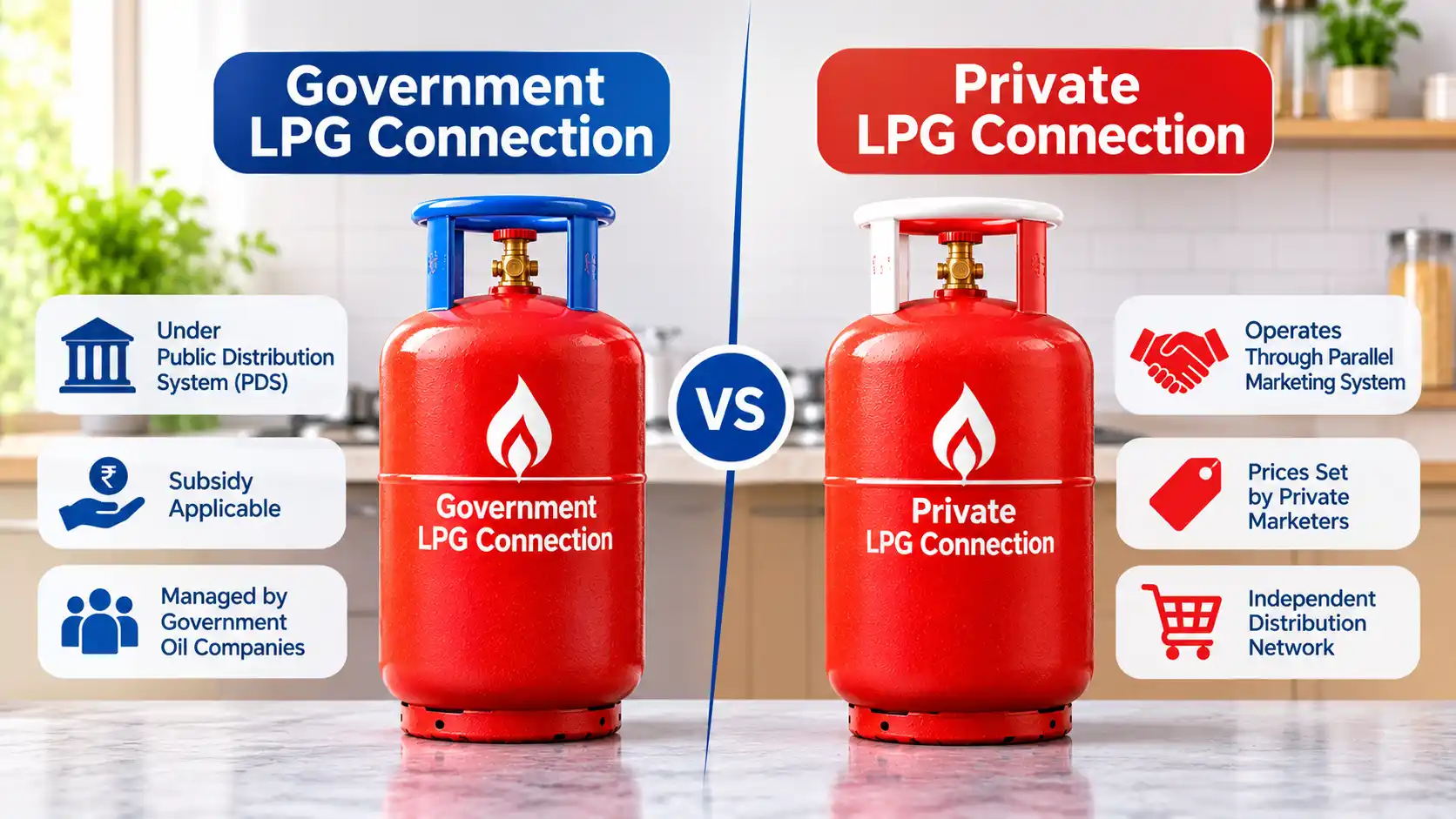
Before getting a private LPG connection, it is important to understand how the two distribution systems work.
Government LPG Connection: Government LPG connections are supplied through the Public Distribution System (PDS). These connections are managed by government-owned oil companies and their authorised distributors. Households receive domestic LPG cylinders through this network under the applicable pricing and subsidy arrangements.
Private LPG Connection: Private LPG suppliers operate through the Parallel Marketing System (PMS). Under this arrangement, private marketers can import and sell LPG independently of the government distribution network. Their cylinder prices and commercial arrangements are determined separately.
The government recognises private LPG marketing as a separate distribution system. However, the rules governing households with existing government connections also place restrictions on possessing LPG from other sources.
According to the LPG (Regulation of Supply and Distribution) Order, 2000, a household with a PDS connection cannot simply obtain and use LPG from an unauthorised source.
Therefore, having a private LPG connection alongside an existing government connection should not be assumed to be permitted.
Here is a simple comparison of common LPG connection combinations and their applicable conditions.
| LPG Connection Combination | Status |
|---|---|
| Two government LPG connections under one household | Generally not permitted |
| Government LPG + Private LPG cylinder | Restricted under existing PDS rules; obtain official clarification before proceeding |
| Government LPG + PNG connection | Subject to the 2026 surrender or transfer voucher requirements |
| Separate government connections for independent households | Possible if they meet separate household and kitchen requirements |
The one-household-one-connection rule primarily prevents households from holding multiple government LPG connections. However, another restriction also applies to the source of LPG used by an existing PDS consumer.
This distinction is important when considering a private LPG connection. Even though private companies can market LPG, their permission to operate does not automatically extend to every household holding a government connection.
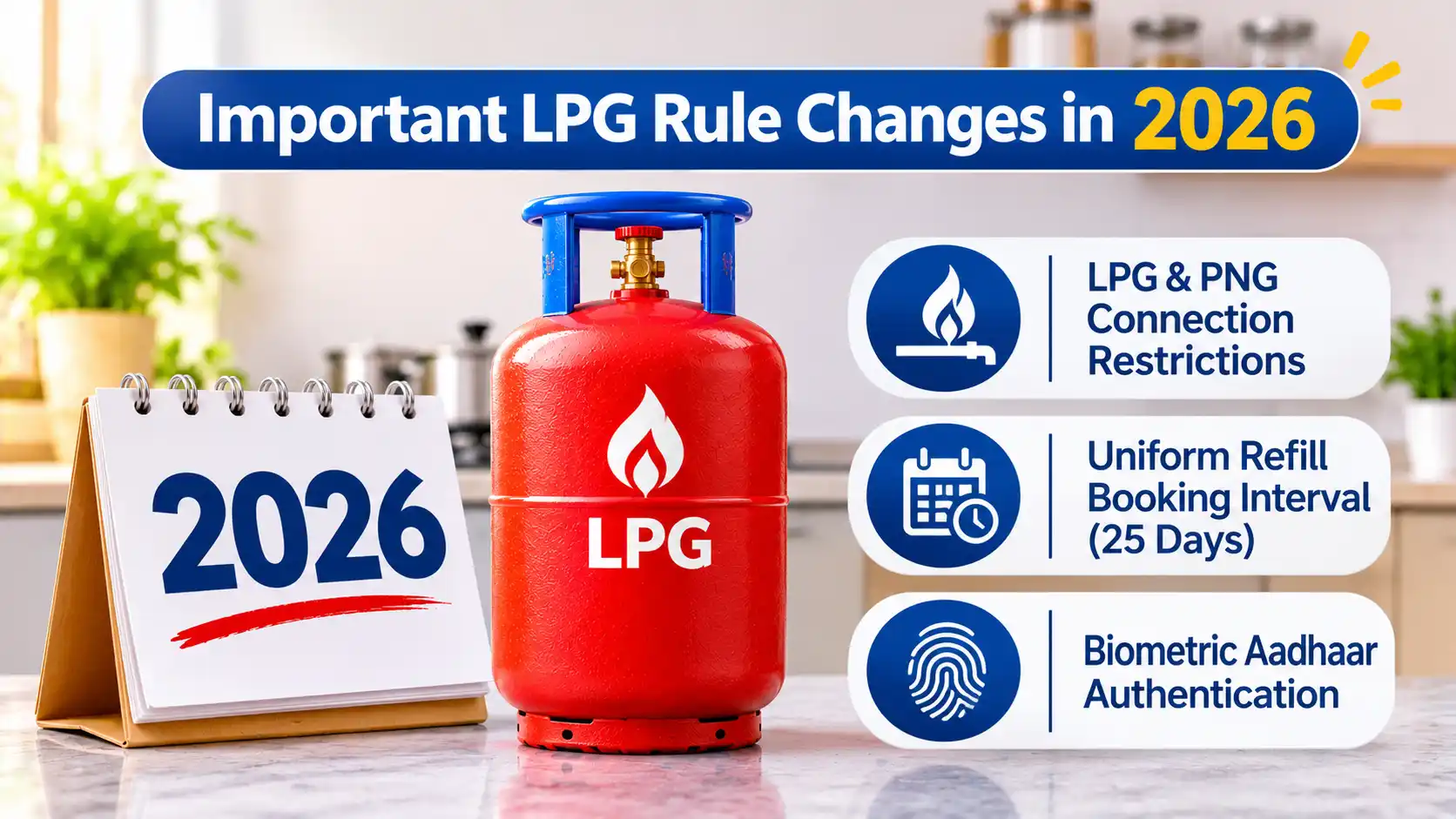
Apart from connection eligibility, some important changes introduced in 2026 affect domestic LPG consumers.
The government introduced changes to domestic LPG connection rules in March 2026 for households obtaining Piped Natural Gas (PNG) connections.
Under the updated provisions announced on 25 May 2026, consumers with both domestic LPG and PNG connections have two options:
The Transfer Voucher provides flexibility to households that may relocate for employment, education or other reasons.
For example, if you move from a PNG-connected city to an area where piped gas is unavailable, the voucher provides an option to restore your previous LPG connection.
Read the official Ministry announcement on the 2026 LPG and PNG changes for details.
From September 2026, the government introduced a uniform minimum gap of 25 days between domestic LPG refill bookings for urban and rural consumers.
This measure regulates how frequently consumers can book their next refill. It does not provide automatic eligibility for an additional private LPG cylinder.
From 1 October 2026, Biometric Aadhaar Authentication (BAA) became applicable to consumers seeking subsidised domestic LPG refills at the regulated retail selling price.
Consumers who have already completed authentication do not need to repeat the process. Others can complete it during cylinder delivery, at their distributor’s showroom or through the respective oil marketing company’s mobile application.
These changes make it important to check your connection status and refill eligibility before considering another LPG supply arrangement.
If you are exploring private LPG suppliers, do not make a purchase based only on advertised prices or delivery promises.
Here are three important checks:
Check the rating certificate: Private LPG marketers must hold a valid rating certificate from an approved rating agency.
Understand the rating: The certificate carries a rating such as Good, Satisfactory, Low Risk or High Risk. Check the supplier’s current rating and certificate validity before making a payment.
Verify payment and deposit conditions: The Ministry does not issue licences to private LPG marketers or guarantee consumer deposits. It also does not take responsibility for commercial disputes between private suppliers and customers.
Therefore, check your private LPG supplier’s details, cylinder specifications, delivery arrangements and payment terms before entering into an agreement.
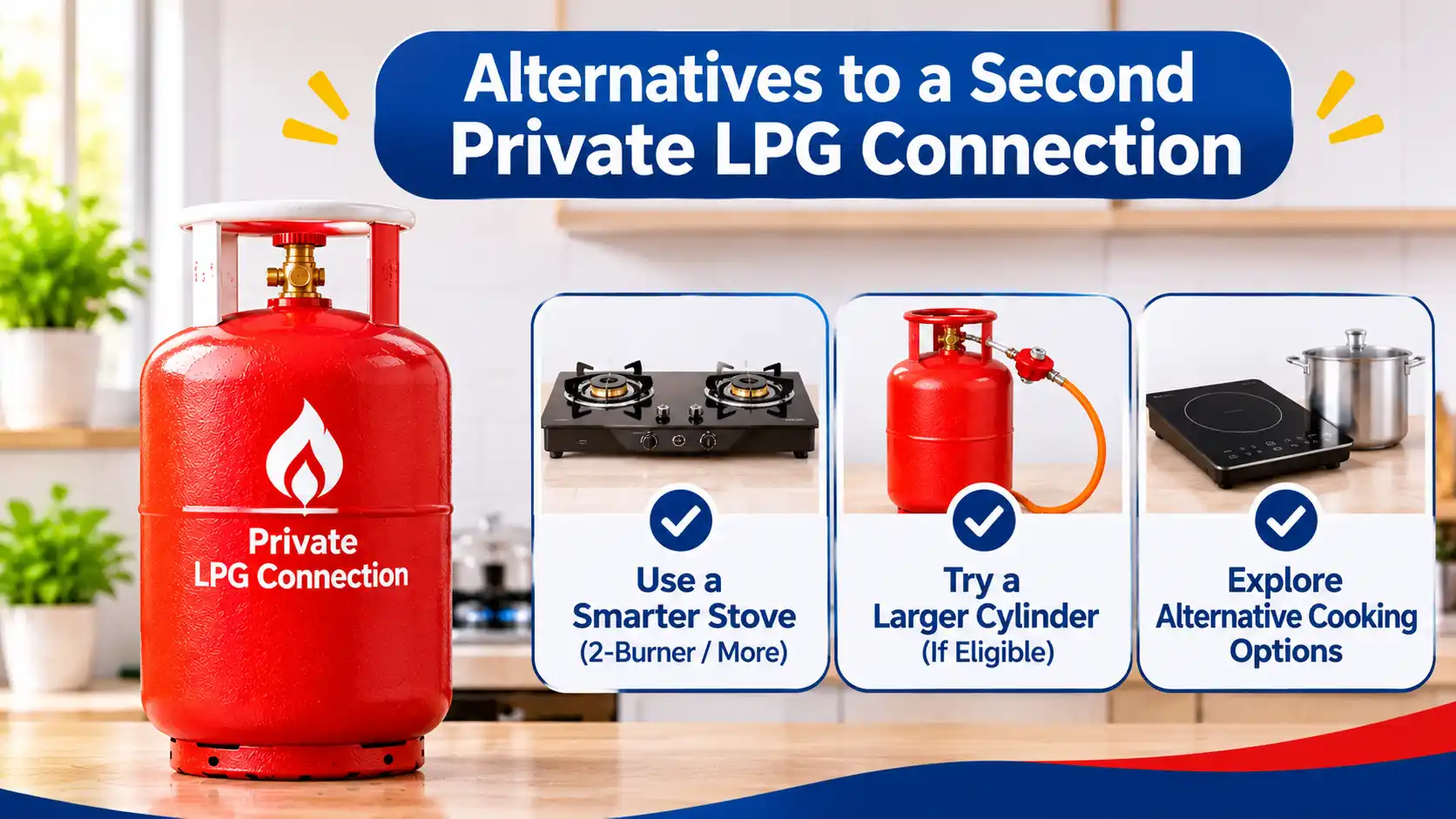
If your main requirement is an additional cylinder for household use, you can consider other arrangements.
A Double Bottle Connection provides two cylinders under one registered government LPG connection. You can use the second cylinder when the first one becomes empty and arrange a refill without immediately running out of cooking gas.
A 5 kg Free Trade LPG (FTL) cylinder is another option for consumers who need a smaller quantity of cooking gas. It is available through authorised channels without the regular domestic subsidy arrangement.
It can be useful for limited consumption requirements, provided you meet the applicable purchase conditions.
Private LPG suppliers offer independently priced cylinders and their own delivery arrangements. However, households with an existing government connection should first confirm their eligibility under the applicable regulations before choosing this option.
Compare the refill price, delivery charges, cylinder deposit and other costs rather than considering only the initial purchase price.
An additional cylinder may appear to be a convenient solution for managing household cooking requirements. However, checking the applicable connection rules is just as important as comparing prices and delivery arrangements.
Before applying for a private LPG connection, confirm that your proposed arrangement complies with the current regulations. This will help you manage your household’s cooking requirements without overlooking safety or regulatory responsibilities.
Not automatically. However, using private LPG while holding a PDS connection raises regulatory concerns. Subsidy eligibility and permission to possess another LPG supply are separate matters.
Registering connections in different names does not automatically make them eligible. The authorities consider whether the individuals belong to separate households with independent kitchens.
You must follow the applicable 2026 requirements. You can apply for termination of your domestic LPG connection within 30 days of obtaining PNG or obtain a Transfer Voucher for future restoration in a non-PNG area.
No. Always use the regulator and associated equipment specified for the respective cylinder. Never interchange regulators, valves or incompatible connecting equipment.
Not necessarily. Private LPG prices are determined independently, while domestic government LPG prices follow applicable pricing arrangements. Compare refill costs, deposits and delivery charges before deciding.



Comment (0)