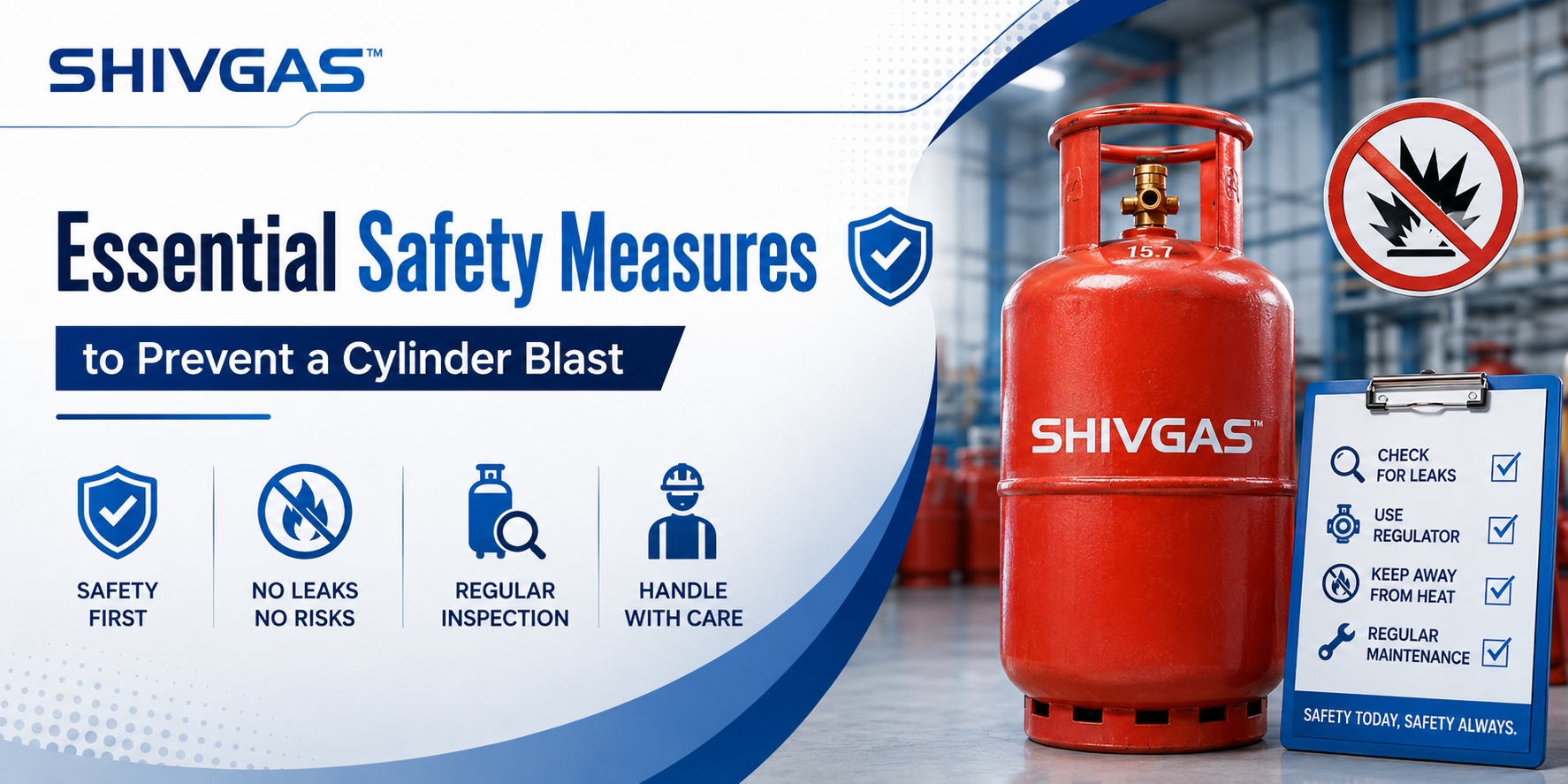
If you’ve ever felt a slight whiff of gas near your kitchen stove and your heart skipped a beat, you already understand why cylinder safety isn’t something to take lightly. A cylinder blast is rare when a cylinder is handled correctly, but the moment carelessness creeps in — a worn-out rubber tube, a loose regulator, or a cylinder left too close to an open flame — the risk climbs fast. At SHIVGAS, we’ve spent years working directly with households, restaurants, and industrial units across eastern India, and one thing has stayed consistent: most accidents are preventable with a handful of simple habits.
This blog walks you through the practical, no-nonsense steps that actually reduce the chances of an LPG mishap at home or at work, and what to do if things ever go wrong.
Before jumping into prevention, it helps to understand the mechanics. LPG (liquefied petroleum gas) is stored under pressure inside a metal cylinder. As long as the cylinder, regulator, and tubing are in good condition and free of leaks, the gas stays exactly where it should. Trouble starts when gas escapes into a confined space and meets a spark or flame — that’s when a small leak turns into a serious gas cylinder blast.
Common triggers include:
None of these are complicated to fix, which is exactly why prevention is so effective. If you want a deeper look at how gas fires start and spread, our detailed piece on handling an LPG leak safely is worth a read.
Every cylinder that leaves a certified bottling plant carries a safety seal and an expiry stamp. Before connecting a new one, glance at the seal, check for dents or rust, and confirm it hasn’t crossed its testing date. We’ve written a simple guide on how to check your LPG cylinder’s expiry date that takes less than two minutes to follow. A cylinder that’s overdue for hydrostatic testing is far more likely to develop weak points in its casing, which raises the risk of a cylinder blast over time.
The regulator is the single most important safety component sitting between the cylinder and your stove. A loose or ill-fitting regulator is one of the most common causes of leaks reported by households. Make it a habit to press down and turn the regulator knob fully after fitting a new cylinder — you should hear a distinct click. Pair this with a rubber tube that’s replaced every couple of years (heat and rodents both damage tubing faster than people expect), and you’ve already eliminated a big chunk of risk. Our team put together a set of do’s and don’ts for LPG cylinder handling that covers this in more depth.
LPG is heavier than air, so if it leaks, it settles near the floor instead of dispersing upward. A kitchen with poor airflow lets gas pool quietly until it reaches a spark. Keep a window or exhaust vent open whenever the stove is in use, and never store a spare cylinder in a sealed cupboard. If you’re unsure whether your current storage setup is safe, this guide on proper storage and handling of LPG cylinders breaks down exactly what an ideal setup looks like — including why keeping the cylinder upright matters (lying it down, even briefly, can affect the valve and increase leak risk, something we’ve explained further in our piece on whether a horizontal cylinder position is safe).
You don’t need fancy equipment to catch a leak early. A simple mix of soap and water, brushed over the regulator joint and tubing, will bubble up instantly if gas is escaping. It takes thirty seconds and could genuinely save a life. We’ve documented the exact method in our post on detecting leaks with the soapy water test, and it’s a habit worth building into your monthly routine, not just something you do when you smell gas.
LPG is naturally odourless, which is exactly why suppliers add ethyl mercaptan — that sharp, rotten-egg smell — as a built-in warning system. If you ever catch that odour, don’t flip any electrical switches, don’t light a match, and don’t use your phone in the room. Turn off the regulator, open doors and windows, and move outside. This single reflex prevents the vast majority of LPG cylinder blast incidents that make the news.
A surprising number of kitchen fires start with things people assume are harmless — a loose burner cap, a stove placed too close to curtains, or cooking oil left unattended on high flame. Cylinder safety isn’t only about the cylinder itself; it’s about everything around it. Our guide on five practical ways to prevent an LPG gas explosion at home covers these everyday blind spots that often get overlooked.
Modern cylinders come fitted with a safety relief valve designed to release excess pressure before it becomes dangerous. It’s a small piece of engineering that does a lot of quiet work. If you’re curious about how this actually functions, our explainer on how safety relief valves prevent LPG explosions is a genuinely useful read for anyone who wants to understand the science rather than just follow instructions blindly.
This is the question everyone hopes they’ll never need to answer, but it deserves a clear plan anyway:
Having this sequence memorised, rather than figuring it out under panic, is what separates a scary moment from a tragedy.
None of this requires expensive equipment or technical expertise — just a bit of consistency. Check your cylinder when it arrives, test for leaks periodically, keep your kitchen ventilated, and treat that rotten-egg smell as a non-negotiable signal to act. If you’re setting up a new connection or replacing an old cylinder, it’s worth choosing a reliable source; our 17 kg LPG gas cylinder is tested and certified for safe domestic use, and our wider safety resources on the LPG safety tips page go into even more detail for households and businesses alike.
A gas cylinder fire rarely happens out of nowhere — it’s almost always the result of a warning sign that went unnoticed. Pay attention to the small details, and your kitchen stays exactly what it should be: safe, reliable, and worry-free.





Comment (0)