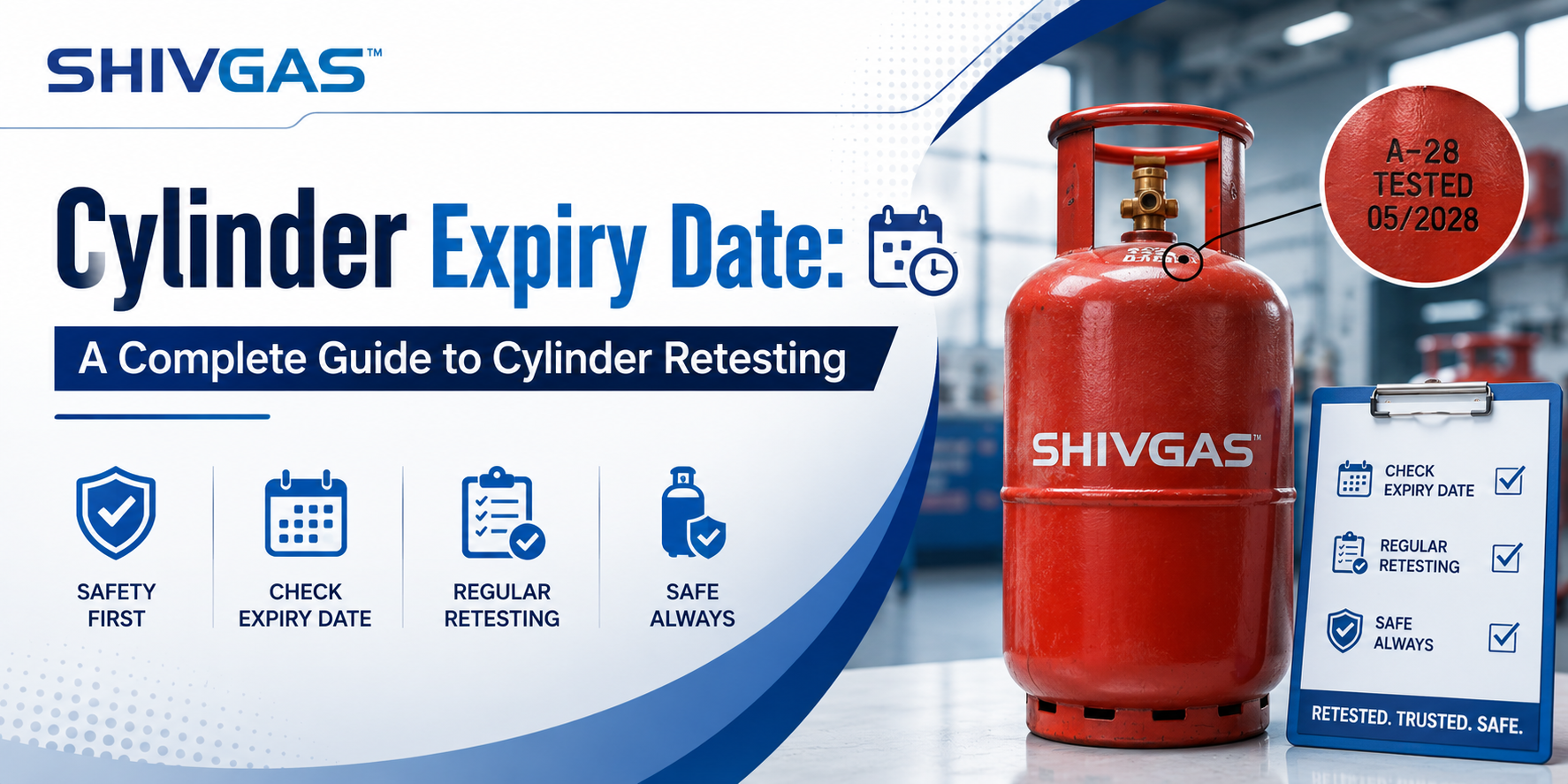
Most people check the expiry date on a milk packet without a second thought, but ask them about their LPG cylinder’s expiry date, and you’ll usually get a blank stare. It’s an odd blind spot, considering the cylinder sits in the kitchen every single day. The truth is, a gas cylinder isn’t a lifetime product — it’s a pressurised steel vessel that goes through wear over the years, and like anything under pressure, it needs periodic checks to stay safe.
At Shiv Gas, we deal with cylinder testing, replacements, and customer queries about expiry dates every week, so we know exactly where the confusion usually comes from. This guide clears up what the expiry date actually means, how to read it, and why retesting matters more than people realise.
Unlike food products, a gas cylinder expiry date isn’t about the gas going bad — LPG itself doesn’t expire. What actually has a shelf life is the cylinder’s metal body. Over time, exposure to moisture, temperature changes, and repeated pressure cycles can weaken the steel. To catch this before it becomes a safety issue, every cylinder undergoes periodic testing, and the date stamped on it tells you when the next test is due.
So when someone asks about the lpg cylinder expiry date, they’re really asking: “When does this cylinder need to be tested again before it can keep circulating?” It’s less an expiry and more a scheduled health check.
This is the part that trips most people up, because the date isn’t written in plain numbers — it’s coded. Look at the vertical strips near the cylinder’s neck, close to the valve. You’ll find an alphanumeric code like A-24 or D-26.
Here’s how to decode it:
So a code reading B-25 means the cylinder is due for testing sometime between April and June 2025. We’ve put together a more detailed breakdown with real photo examples in our post on how to check your LPG cylinder’s expiry date, which is worth bookmarking if you want a quick visual reference next time you’re unsure.
Retesting isn’t a bureaucratic formality; it’s a genuine structural check. Cylinders undergo something called hydrostatic testing, where the vessel is filled with water and pressurised well beyond normal operating levels to confirm it can still handle the stress safely. If a cylinder fails, it’s pulled out of circulation immediately rather than being sent back to a customer’s kitchen.
We’ve explained the mechanics of this process in detail in our article on why LPG cylinders require hydrostatic testing, and if you use auto LPG for a vehicle, the testing requirements are slightly different — our piece on facts you must know about auto LPG cylinder testing covers that specifically.
In India, domestic LPG cylinders are typically tested every 5 to 10 years depending on their manufacturing batch and material, while commercial cylinders often follow a shorter cycle given heavier daily use. Skipping this isn’t something a consumer can quietly ignore either — gas agencies are required to withdraw cylinders that have crossed their testing window, so an outdated cylinder simply won’t get refilled or delivered.
This is where the topic stops being administrative and starts being genuinely important. A cylinder that’s overdue for testing may have developed micro-level weaknesses in its welding or outer casing that aren’t visible to the naked eye. Continuing to use it increases the risk of leaks, corrosion-related damage, or in rare but serious cases, cylinder failure under pressure.
If you’re someone who keeps a spare cylinder around “just in case,” it’s worth checking our guide on proper storage and handling of LPG cylinders — an old, unused cylinder sitting in storage for years is exactly the kind of scenario where an expiry date gets forgotten. Pairing that habit with our broader LPG cylinder safety tips for the home gives you a fuller picture of what safe day-to-day cylinder ownership actually looks like.
Realistically, you don’t need to check it every week. A good habit is to glance at the code whenever a new cylinder is delivered, and note it down somewhere — a sticky note on the fridge works fine. That way, when the testing window approaches, you’re not caught off guard.
It’s also worth periodically checking your cylinder’s gas level and general condition alongside the expiry code. Our guide on how to check your LPG cylinder level at home is a handy companion practice, since a cylinder nearing both low gas and an expiry deadline is a good prompt to book a replacement early rather than waiting till the last moment.
Yes, slightly. Commercial cylinders — the kind used in restaurants, catering setups, or small manufacturing units — tend to face more frequent handling, transport, and temperature exposure, so agencies often recommend shorter monitoring intervals even within the official testing window. If you run a business relying on LPG, our article on longevity tips for commercial gas cylinders is a practical read, especially if you’re trying to reduce downtime from unexpected cylinder swaps.
There’s also a common question around cylinder types — whether a composite (lightweight, see-through) cylinder or a traditional steel one is easier to monitor for wear. We’ve compared the two directly in LOT cylinders vs conventional cylinders, which touches on how each material ages differently over its testing cycle.
Understanding your cylinder’s expiry date isn’t about memorising a coding system for the sake of it — it’s a small habit that keeps your kitchen genuinely safer. Once you know where to look and what the letters and numbers mean, checking it becomes as routine as glancing at a fuel gauge. And if you ever spot a cylinder that’s overdue, don’t wait around — flag it with your gas agency and get it swapped before it becomes a bigger problem than a simple retest.






Comment (0)