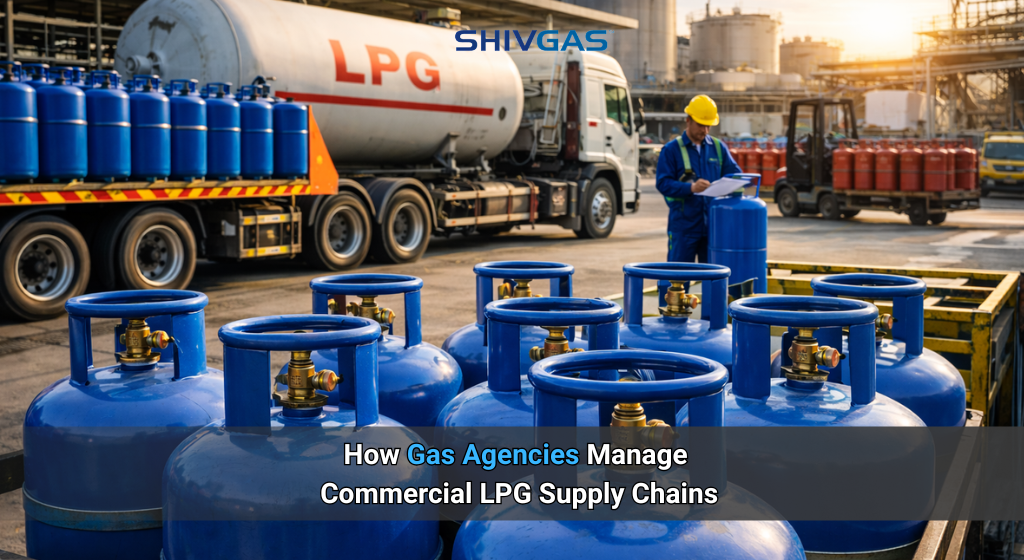
When you run a restaurant, hotel, factory, or commercial kitchen, LPG is not just another utility. It is the fuel that keeps your business running without interruption. One delayed delivery or one unexpected shortage can stop your operations, affect customer service, and increase recurring costs. This is why the role of a gas agency becomes critical in commercial LPG supply.
You depend on your local gas agency to understand your consumption pattern, plan your refills on time, and ensure continuous availability without you having to follow up repeatedly. Commercial LPG demand doesn’t work the same way as household LPG supply. It is larger, more frequent, and less flexible. Gas agencies manage this responsibility by building a structured supply chain that focuses on planning, coordination, safety, and reliability.
In this blog, you will understand how LPG agencies manage commercial LPG supply chains in day-to-day operations.
Gas agencies plan commercial LPG demand in a practical and structured way. They do not wait for shortages or urgent calls. Instead, they study usage patterns, prepare stock in advance, and organise supply so that your business continues without disruption. This approach has become even more important as India’s LPG demand has grown steadily in recent years, with commercial and industrial users accounting for around 16% of total LPG consumption in FY25.
Here’s how gas agencies analyze the commercial LPG market:
Gas agencies first understand how much LPG your business uses. They track daily consumption, peak usage hours, and seasonal changes. For instance, a restaurant may use more LPG during service hours, while a factory may consume LPG based on any shift in production patterns. By studying these patterns, the gas agency knows how often you need refills and how much LPG must always be available for your operations.
After understanding your usage, gas agencies plan refills in advance. They schedule deliveries based on your expected consumption instead of waiting for emergency requests. This planning helps you avoid last-minute pressure and ensures that you receive backup LPG cylinders before your stock runs low.
Commercial LPG demand changes without any prior notice. Events, bulk orders, or longer working hours can increase consumption rate. Gas agencies stay prepared for such situations by keeping extra stock ready and maintaining flexible delivery plans. This preparation allows them to respond quickly when demand increases and prevents supply interruptions.
Once the demand graph is clear, gas agencies secure LPG supply from their tie-up suppliers. They place bulk orders based on projected requirements and stay in regular contact to ensure timely dispatch. Moreover, gas agencies also consider supplier lead time and transport schedules so that they can estimate their consumers about the delivery. This coordination reduces delays and keeps the entire logistical process transparent.
Most private and PSU gas agencies have dedicated, organised storage facilities. They have separate sections for filled and empty cylinders and follow proper rotation so cylinders move out in the correct order (no expired cylinders stay in the lot).
Read More: Is There an Expiry Date for LPG Gas?
Agencies also keep buffer stock to cater to emergency supply or unexpected demand spikes.
Gas agencies plan their transportation fleet based on delivery volume, distance, and the type of commercial customers they serve. They allocate vehicles specifically for bulk and commercial LPG supply so that regular business deliveries do not get delayed due to domestic distribution schedules.
Along with vehicle planning, gas agencies train delivery personnel to handle LPG cylinders safely. They train their delivery staff with proper loading and unloading methods, correct cylinder handling, conducting basic safety checks, and emergency response procedures.
So, before you choose a gas agency, see if they have these facilities or not.
Safety remains a top priority in commercial LPG supply. Gas agencies inspect cylinders for leaks, valve condition, and damage before dispatch. Delivery teams follow safety procedures during loading, transport, and unloading. Many private LPG gas agencies also educate customers on proper cylinder placement, ventilation, and regulator checks to maintain safety at the site.
Gas agencies operate under government regulations issued by authorities such as the Petroleum and Explosives Safety Organisation (PESO) and the Oil Marketing Companies (OMCs) they are authorised by. These rules clearly define how LPG must be stored, transported, and supplied to commercial users. To stay compliant, every LPG agency holds valid licenses for storage facilities, delivery vehicles, and cylinder handling operations.
They also maintain a record of their operations. For example, delivery registers and digital logs help track when cylinders leave the godown, when they are delivered, and when empties return. These records support safety inspections, regulatory audits, and internal checks.
Many gas agencies now use basic digital tools to manage daily operations. These systems track available stock, scheduled deliveries, and regular refill cycles for commercial customers. With this information, agencies plan supply more accurately and avoid last-minute delivery issues.
There are also facilities for digital booking options that let commercial customers place refill requests through online portals, mobile apps, or system-based requests instead of depending only on phone calls. This speeds up ordering, reduces booking errors, and gives both the agency and the customer a clear record of each request.
In commercial operations, trust matters more than promises. You need to know that a reliable gas agency earns that trust by planning your LPG supply. When your gas agency manages the supply chain properly, you don’t have to monitor gas levels constantly or worry about last-minute shortages. This way, your daily operations continue running at a stable pace and you are able to cater your customers more efficiently without fearing supply disruptions.
If your LPG usage increases suddenly, inform your local gas agency immediately. They will check your current stock, arrange additional cylinders or bulk supply, and adjust your refill schedule so that your operations continue without interruption.
They track your regular consumption pattern and plan refills well in advance. They also keep buffer stock ready especially for commercial customers, so even during high demand or emergency need of LPG cylinders, you never run out of fuel.
Yes. For our regular business customers, gas agencies have flexible delivery plans. If you need urgent supply they have a dedicated fleet standby to cater to your needs.
Before dispatch, a gas agency checks each cylinder for leaks, valve condition, and any physical damage. During delivery, trained staff ensure the cylinder is placed safely in a well-ventilated area and also explain basic usage and safety guidelines to you.






Comment (0)