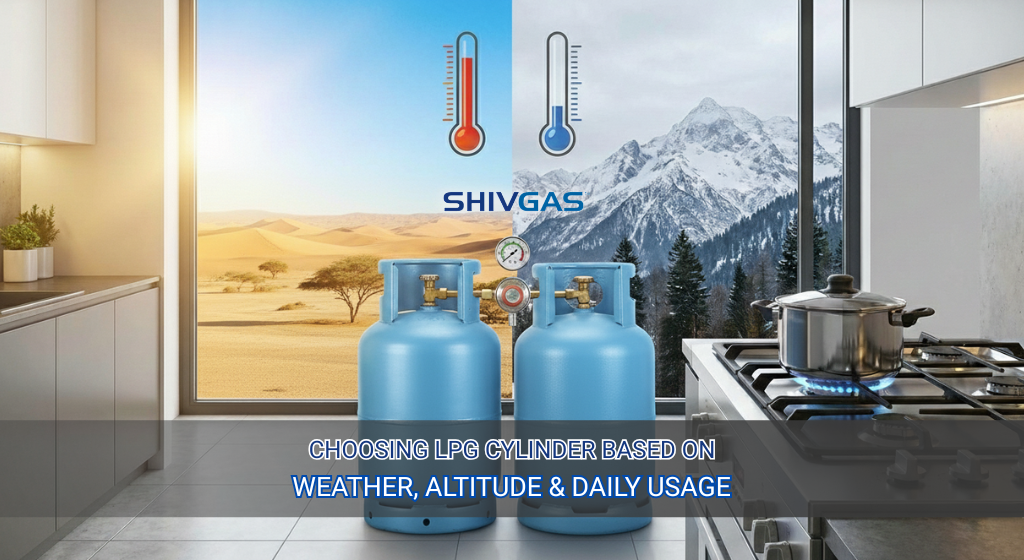
When you use an LPG cylinder, you expect it to work safely and consistently. But what many people don’t realise is that the climate in your region affects how your LPG (Liquefied petroleum gas) fuels your daily cooking or other operations. For example, if you live in a hot region where temperatures rise to 40 degrees and above, the LPG pressure rises faster. If you live in a cold or high-altitude area, the flame tends to become low because the gas doesn’t vapourize completely.
Most households use whichever cylinder is easily available, but choosing the right one based on temperature, altitude, and usage can improve both safety and performance. This is why many private gas companies now recommend and offer climate-specific cylinders and proper consumer education on LPG cylinder safety practices.
This blog helps you decide which is the right LPG cylinder for your region. You’ll learn how climate affects LPG pressure, which cylinder types work best in different zones, and what safety steps ensure reliable everyday use.
LPG is stored as a liquid under pressure, and the surrounding climate plays a major role in how it behaves. In extremely hot regions, rising temperatures cause LPG to expand, increasing the internal pressure. This stresses the valve, gasket and regulator, especially if the cylinder is exposed to direct sunlight.
On the other hand, cold regions slow down this vaporization process, resulting in a sluggish or inconsistent flame. High-altitude areas further complicate the process because reduced oxygen availability disrupts proper combustion even when the gas supply is adequate.
LPG pressure usually ranges between 5 to 15 bar under normal conditions, but this range shifts significantly with temperature. At temperatures above 40°C, internal pressure rises sharply, and the cylinder needs better heat resistance to ensure safe functioning. In colder climates, especially below 10°C, the pressure drops dramatically, making it difficult for LPG to vaporize quickly enough to support a stable flame.
Altitude makes this even more complex. As elevation increases, atmospheric pressure decreases, reducing oxygen density. With less oxygen available, the LPG–air mixture becomes unbalanced, leading to yellowish flames, partial combustion and increased soot formation. This is why cooking in the mountains often feels slower, even when gas quantity is sufficient.
The market today offers multiple types of cylinders, each designed for different climates, cooking volumes, and user requirements.
The 14.2 kg steel LPG cylinder is India’s most trusted household fuel source. Its strong metal body maintains stable LPG pressure even in cold regions, making it ideal for hill stations and areas with fluctuating temperatures. Although it is heavy to lift, it offers consistent flame, long-lasting fuel capacity, and reliable safety standards. Regular hydrotesting and valve inspections need to be conducted which will make it perfect for families and daily cooking needs.
Composite cylinders have quickly become popular in hot or coastal regions because they resist heat, do not corrode, and maintain more stable LPG pressure compared to metal cylinders. Their body is lightweight, modern-looking, and semi-transparent, allowing users to check gas levels easily. Many private gas companies prefer offering composite cylinders because they are easier to transport and safer under high temperature. However, these cylinders may slightly underperform in extremely cold or high-altitude locations.
Perfect for bachelors, students, renters, and small families, the 5 kg cylinder offers the convenience of easy handling and compact storage. Despite its size, it performs exactly like a full-size cylinder in terms of flame strength and safety. It is also a great backup cylinder during festival seasons or high-demand months. This LPG cylinder category has become a top choice for urban consumers.
The 19 kg cylinder is mainly used by restaurants, food businesses, and joint families. It offers stable LPG pressure and maintains strong flame output even during long cooking hours.
Industrial cylinders are engineered for high-pressure applications like welding, metal cutting, manufacturing, and industrial heating. These cylinders are not relevant for home cooking, but their existence highlights how LPG adapts to different environments apart from climatic conditions.
When you buy an LPG cylinder, it is not just considering the climate only. Here are some more key decision factors.
Safety should always come first. Ensure the cylinder carries:
A certified cylinder undergoes rigorous quality checks and meets national LPG cylinder safety standards. This ensures you receive a safe, leak-free, and pressure-tested cylinder every time.
High-altitude places stay cold for most of the year. This affects the internal LPG gas pressure. Metal cylinders work better in cold regions, while composite cylinders are great for hot climates due to temperature stability and rust-free design.
In high-altitude areas, gas pressure drops quickly due to cold weather and thin air. This often leads to low flame problems. A good cylinder should give you:
Before buying, ask your supplier if the cylinder performs well in cold and high-altitude conditions.
Your family size and cooking habits decide which cylinder is right for you:
Great for singles, students, or people who cook occasionally
Works for most families with regular daily cooking
Perfect for large families, home bakers, or heavy usage kitchens
Choosing the right size saves you from frequent refills and keeps cooking consistent.
In hilly areas, delivery can be slow because of road conditions. Before choosing a supplier, check if they offer:
Many private gas companies provide faster and more flexible delivery in remote regions.
Cold weather can make hoses hard and reduce regulator performance. Even the best cylinder becomes risky to use. Always use:
Get them checked regularly, as cold temperatures can cause cracks or leaks.
Your stove should be able to handle low-pressure situations. Check that:
If your flame becomes weak during winter, inform your gas supplier. They can help adjust the pressure or suggest a better cylinder size.
Storing your LPG cylinder correctly is just as important as choosing the right one. Here are the basic safety practices every household located in high-temperature and high altitude zones should follow:
Always place the LPG cylinder in a vertical position. Laying it sideways increases the risk of leakage and pressure imbalance.
Store the cylinder in a place with good airflow—never in a closed cabinet. Ventilation helps disperse any accidental gas release.
Avoid keeping cylinders near stoves, ovens, electrical appliances, or open flames. Heat can increase LPG pressure inside the cylinder.
Make it a habit to close the cylinder valve after cooking. This prevents accidental gas flow and adds an extra layer of safety.
Use a soap-water solution to check around the valve and hose. If bubbles appear, turn off the gas supply and contact your supplier immediately.
Read More: LPG Production, Storage, and Delivery: All You Need to Know
When it comes to selecting an LPG cylinder for your home, it carries one of the biggest responsibilities: keeping your family safe while serving as a cooking medium for your everyday meals. Many people still believe that all cylinders work the same, which creates a debate—
does climate really matter, or is any cylinder good enough?
The truth is that temperature, altitude, and pressure changes do influence how your LPG performs, and ignoring these factors can lead to low burner flame and even unnecessary safety risks.
A climate-appropriate cylinder eliminates these problems before they begin. A cylinder selected thoughtfully, stored correctly, and used responsibly transforms the entire cooking experience. It gives better flame stability, and safer operation—no matter how hot, cold, or unpredictable the climate in your region becomes. In the end, the best choice is always the one that prioritizes safety first and adapts to your home-cooking needs.
No, it is not risky! But you need to be more careful. In extremely hot regions, metal cylinders absorb heat faster, which increases internal pressure. If your cylinder is kept in a shaded, ventilated area and inspected regularly, it will work perfectly fine.
There’s nothing wrong with your cylinder. Cold weather slows down LPG vaporization, which naturally weakens the flame. The solution is simple: keep your cylinder in an indoor but ventilated space during winters and ensure your regulator is not clogged.
Not immediately. High altitude means thinner oxygen, which disrupts the LPG–air mixture and causes yellowish flames. Your cylinder is usually not the issue. A high-altitude regulator or a burner with better air adjustment will solve the problem. Your LPG supplier can guide you better on this.
In high-altitude regions, LPG pressure drops more quickly due to colder temperatures and thinner air. A bigger cylinder generally maintains stable pressure for a longer time, giving you a steady flame and fewer refill interruptions
A loose regulator doesn’t always mean a leak. Sometimes the rubber washer inside the valve becomes worn out. Replace the washer or ask your supplier for a valve inspection. If you ever smell gas, close the valve immediately before checking anything else.



Comment (0)