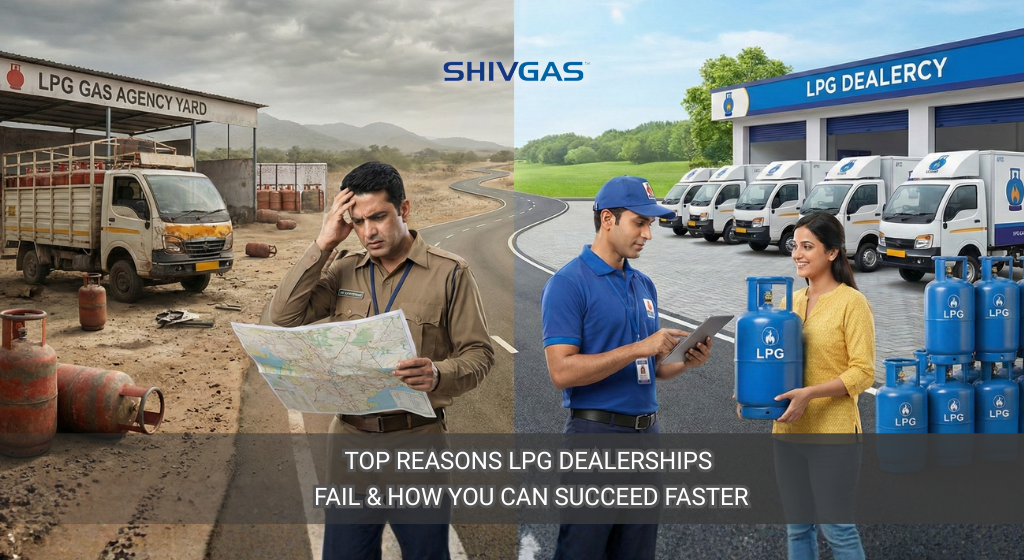
Running an LPG dealership looks stable from the outside, but the reality is far more demanding than most new dealers expect. While the business promises steady demand and long-term customers, it also comes with thin margins, strict regulations, and almost zero tolerance for error. Most LPG gas agency dealerships do not fail because of competition. They fail because small operational gaps go unnoticed for too long, and by the time the dealer realises the damage, the business has already started losing money, customers, and reputation.
If you are planning to start an LPG gas dealershipor already operate one, you must understand the hard truth: this business punishes carelessness, slow decision-making, and poor systems..
This blog explains the top reasons LPG dealerships fail, the warning signs that indicate your business is slipping, and the immediate actions you need to take to secure long-term success.
The first mistake most dealers make is assuming that an LPG dealership will run smoothly on its own. The margins are tight, meaning every operational inefficiency directly affects your bottom line. Customers expect fast delivery, proper communication, and consistent service, and they switch to alternatives quickly if these expectations are not met. At the same time, the business is highly regulated, and every safety lapse comes with serious consequences. One untrained helper, one delayed inspection, or one missed safety protocol can shut down operations within days.
To succeed in an LPG dealership business, you must operate with discipline. You need clear processes, trained staff, strict compliance, and immediate response systems. Ignoring any of these areas leads can slow down operations and gradually decline.
Many LPG dealerships fail simply because they are set up in the wrong place. Dealers often choose locations based on accessibility or cost rather than understanding where actual demand exists. If your LPG dealership struggles with slow walk-ins, unpredictable customer demand, or long delivery travel, it is likely that your location strategy is weakening your business. As a result, customers shift to dealers located closer to them or to those who have better route planning.
An LPG dealership does not lose customers because of price. Customers leave when deliveries are delayed, when staff does not respond, and when there is no clarity about when their cylinder will arrive. Delivery mismanagement is the number one cause of avoidable customer migration in the LPG business. If your delivery team is unplanned, understaffed, or poorly trained, your customers will quickly lose trust. This develops a negative reputation about your dealership. Even if you have a solid customer base initially, most people will not tolerate repeated delays.
LPG is a sensitive product that requires strict safety protocols. Many LPG gas dealerships fail because they underestimate the seriousness of compliance. One missed inspection, one outdated fire extinguisher, or one untrained staff member is enough to trigger a complaint or attract regulatory attention. LPG safety guidelines are non-negotiable, and regulators carry out surprise checks more often than new dealers expect. Penalties, suspensions, or complete license cancellation can occur even if the mistake appears small.
Operational mismanagement is one of the most common reasons LPG dealerships slowly collapse. Issues such as missing cylinders, mismatched inventory logs, unrecorded deliveries, and inconsistent tracking of customer accounts contribute to financial leakages. These factors clearly show signs that your dealership is vulnerable to theft, misplacement, and confusion. Over time, these inefficiencies weaken cash flow and hampers your service quality, affecting customer retention and reputation.
Manual operations cause the highest number of avoidable mistakes in LPG dealerships. When customer bookings, payments, delivery routes, and inventory records are managed manually, the chances of error multiply. A misplaced order, an unrecorded cylinder, or an incorrect payment entry can create customer dissatisfaction and financial confusion. When someone is absent or overwhelmed, the entire system becomes unstable. Manual processes reduce accuracy, slow down operations, and lowers your chances to scale your business.
Customers rarely complain more than once. If their concerns go unanswered or delivery delays continue, they silently switch to another dealer. This is one of the most dangerous aspects of customer behaviour in the LPG industry. Once customers form a negative impression, it becomes extremely hard to regain their trust. Dealers often notice this only after demand starts dropping.
When customers feel heard and valued, they stay loyal and become long-term assets for your dealership.
Most LPG gas agency dealerships don’t fail overnight. They decline because some important systems are missing. To grow faster and protect your business from preventable losses, you must strengthen your operations and adopt practices that guarantee stability and long-term success.
Expansion without operational discipline is a trap. Standardise processes, document roles, and build clear systems before attempting to grow. Consistency in your operations leads to reliability and will help attract long-term customers.
Your delivery performance determines your dealership’s reputation. Faster, predictable deliveries lead to customer loyalty. Invest in route planning, delivery manpower, and tracking systems. The dealers who win are the ones who deliver faster and not necessarily the ones who sell cheaper.
Financial stability is the backbone of your LPG dealership. Track your expenses, manage credit wisely, and make timely payments. When you have a predictable cash flow system, it helps maintain smooth operations even during demand fluctuations.
Safety is the strongest pillar of your LPG dealership. Regular audits, staff training, proper cylinder storage, and accurate documentation need to be done religiously. When safety is taken seriously, your dealership remains compliant, trustworthy, and protected from regulatory risks.
Customers remain loyal when communication is clear and consistent. Use SMS alerts, WhatsApp updates, or simple phone calls to keep customers informed about bookings, deliveries, and safety instructions. Proactive communication builds trust and positions your dealership as the customer’s preferred choice over others who fail to keep them informed.
Surviving in an LPG gas dealership business is not about luck. It is about maintaining discipline, fixing issues early, and refusing to overlook operational weaknesses. Most dealerships do not fail because they lack customers. They fail because small operational gaps go unattended for too long.
If your goal is to grow faster, you need to take decisive action now. Identify the red flags, rebuild your systems, and prioritize customer satisfaction at the center of every decision you make. The future of your LPG dealership depends entirely on how quickly and seriously you respond today, long before problems become irreversible.
If delays continue despite increasing manpower, the issue is likely route mismanagement, not staff shortage. Re-evaluate your route planning, cluster customers by location, and introduce fixed delivery timelines. Track your daily turnaround time to identify where the bottleneck actually exists.
Price is rarely the reason customers leave. They switch due to inconsistent delivery, poor communication, or repeated service delays. Call your top customers to understand their concerns. Fix delivery timelines, improve communication, and set up automated booking updates to rebuild trust.
Seasonal fluctuations are normal in LPG dealerships. Build a buffer fund for 3–6 months of operations, shorten customer credit cycles, and analyse your expense patterns during peak demand. Strengthening financial discipline will stabilise cash flow during high-demand months.
Unanswered calls create frustration. Set up a dedicated customer support number, use call-forwarding to multiple phones, or enable WhatsApp booking. Even a basic IVR or auto-reply reduces pressure and improves customer experience.
Investigate the incident immediately. Speak to the customer, listen to your staff, and identify what went wrong. Provide communication training, set behaviour guidelines, and take corrective action.
Frequent breakdowns disrupt service and damage reputation. Schedule regular vehicle maintenance, keep a backup vehicle if budget allows, and track usage to avoid overloading.
Booking cancellations wastes time and resources. Maintain a list of habitual cancellers, confirm bookings through SMS/WhatsApp, and encourage customers to schedule deliveries within a fixed timeframe.



Comment (0)