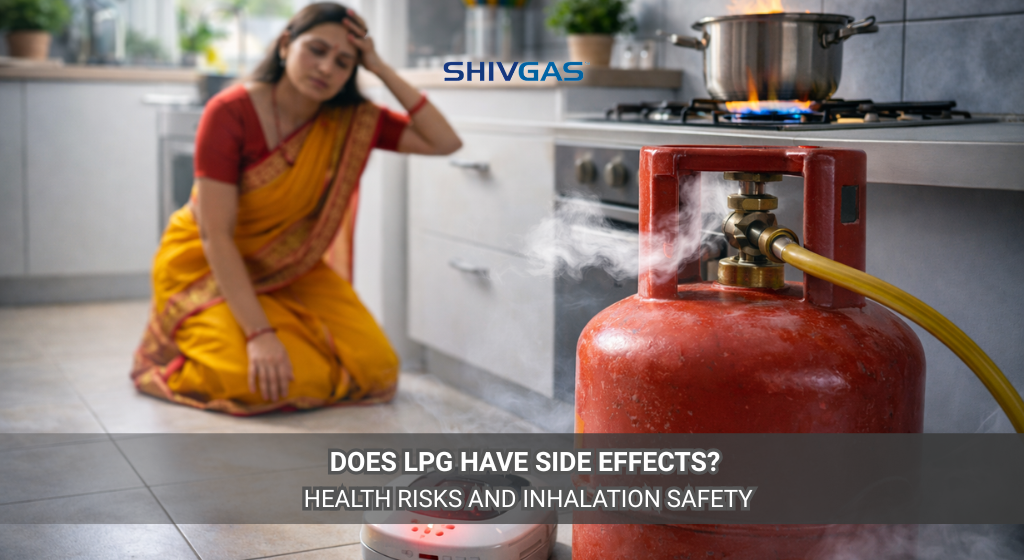
LPG is a reliable and widely used fuel for homes and businesses. When you install it correctly and follow basic safety practices, it works without causing harm. However, when leaks occur or ventilation remains poor, LPG can affect health and can cause safety hazards.
Many people worry about the LPG side effects. The first thing you should understand is this: LPG does not cause health problems during normal use. Health risks appear only when LPG accumulates in enclosed spaces or when people start feeling a bit dizzy after inhaling it for a long time. At that point, the body reacts due to reduced oxygen levels.
This blog explains how LPG affects your body, what health risks you should watch for, and what safety steps help prevent accidents.
LPG, or Liquefied Petroleum Gas, mainly contains propane and butane. Suppliers store it as a liquid under pressure inside metal cylinders. When released, it turns into gas and ignites easily.
But LPG has no natural smell. Manufacturers add a strong odor so you can detect leaks quickly. LPG also weighs more than air. When it leaks, it settles near the floor instead of rising. This property makes LPG leaks dangerous, especially in closed or poor ventilated spaces.
LPG does not cause side effects during normal use. Side effects appear only when you inhale the leaked gas or when LPG displaces oxygen in the air. LPG does not poison or cause harm to your body. Instead, it reduces oxygen levels, which affects how your body functions.
The severity of side effects depends on exposure time, gas concentration, and ventilation. Early action often prevents serious harm. Given below are some serious LPG health risks you can experience when you inhale LPG when it has leaked.
One of the first signs of LPG exposure is a dull headache or a feeling of lightheadedness. This happens when LPG starts replacing oxygen in the air. Your brain needs a steady oxygen supply to function properly. When that supply drops, you feel dizzy, unfocused, or slightly confused.
When you breathe in LPG, you may start feeling nauseous or unusually tired. Your body finds it difficult to cope with reduced oxygen supply, which leads to weakness and discomfort. These symptoms often feel similar to food-related illness or exhaustion, causing delay-in-action when you should actually step outside for fresh air.
The most serious danger linked to LPG is not poisoning, but oxygen loss. LPG inhalation can make breathing feel uncomfortable. You may notice tightness in your chest or feel short of breath. If you have asthma, lung issues, or heart-related medical issues, these symptoms can appear faster and feel more intense.
Not only that, if exposure to this situation continues, a person may feel disoriented, struggle to stay alert, or collapse within minutes due to lack of oxygen.
Direct exposure to leaking LPG can irritate your eyes, nose, and throat. The strong odor added to LPG often causes a burning or stinging sensation. This smell alerts you that there’s ‘LPG leaking from the cylinder’ before it can turn into something dangerous./
Children, elderly individuals, and people with heart or lung conditions react faster to oxygen shortage. Their bodies cannot tolerate reduced oxygen levels which means even a minimum leakage smell can affect them seriously. Early detection and quick action become important in households with vulnerable individuals.
When you inhale LPG, your body does not absorb poison. That’s a myth most people believe in. Your body receives less oxygen than usual. Mild exposure may cause discomfort. Continued exposure makes you aware and you step out into the open for some fresh air. Severe exposure can also make you collapse.
This is why LPG inhalation safety focuses on two things: preventing leaks and ensuring proper ventilation. When air flows freely, gas does not get accumulated in a single place and scale up to something dangerous.
Here are some signs that alert you that there is something wrong with your LPG cylinder.
The smell of gas is your early warning sign. If you notice this smell, never ignore it or assume it will go away on its own. Treat it as an immediate safety concern.
A hissing sound usually means gas is escaping due to a loose connection, worn-out hose, or damaged regulator. Even a small leak can become dangerous if left unattended, especially in enclosed spaces.
If you feel dizzy, uncomfortable, or unusually tired indoors but feel better as soon as you step outside, suspect gas buildup or poor ventilation. Your body starts reacting much before you fully notice that there is a gas leak.
A normal LPG flame burns blue. If the flame turns yellow or orange, it indicates improper combustion. This does not always mean a leak, but it does signal unsafe operating conditions that need immediate attention.
There is no point blaming yourself in case of any damage caused by LPG leakage. But yes, you can definitely adhere to some safety measures to prevent such a situation.
Always keep your kitchen well ventilated while using LPG. Open windows or use exhaust fans to allow fresh air to circulate. Good ventilation prevents gas from accumulating if a minor leak occurs.
Rubber hoses weaken over time. Inspect them for cracks, stiffness, or damage, and replace them when needed. Make sure the regulator fits securely and shows no signs of wear or leakage.
After cooking, close the cylinder valve properly. This simple habit greatly reduces the risk of leaks, especially at night or when you are away from home
Always use certified stoves, regulators, and fittings. Poor-quality or non-standard equipment increases the chances of leakage and unsafe combustion.
Gas leak detectors provide early warnings and add an extra layer of safety. They are especially useful in kitchens with limited ventilation or in homes where LPG is used extensively.
Do not turn electrical switches on or off, and avoid using open flames. Even a small spark can ignite accumulated gas.
In case of LPG gas leak, leave the area and contact your gas supplier or emergency services. Do not re-enter the space until the issue is resolved.
There are some people who still question LPG gas safety. But the answer is yes, LPG is safe for everyday use when you handle it responsibly. Millions of households use LPG without incident because they follow basic safety practices. The gas does not pose a health risk during normal use. LPG side effects occur only when oxygen levels drop due to leaks or poor ventilation.
So, it is requested to everyone to stay alert, follow basic LPG safety practices, and act quickly at the first warning sign before anything serious happens.
Ans. If you smell LPG but cannot identify the leak, open all doors and windows immediately and avoid using electrical switches or flames. Turn off the gas supply if it is safe to do so, move outside, and contact your gas provider for inspection.
Ans. Short-term LPG inhalation usually does not cause permanent damage if you move to fresh air quickly. Most symptoms occur due to temporary oxygen shortage and improve once normal breathing resumes. Prolonged exposure, however, can become dangerous.
Ans. At night, people are usually asleep and may not notice early warning signs like smell or dizziness. Poor ventilation and closed doors also allow gas to accumulate faster, increasing the risk of oxygen deficiency and unconsciousness.
Ans. LPG hoses should generally be replaced every 2 to 3 years or earlier if cracks, stiffness, or damage appear. Regulators should be checked regularly and replaced if they show signs of leakage.
Ans. No. If you smelled gas at any point, ventilate the area fully and identify the issue before lighting the stove. Even if you ignore the fact that there is only a faint smell still left can lead to fire or explosion.





Comment (0)