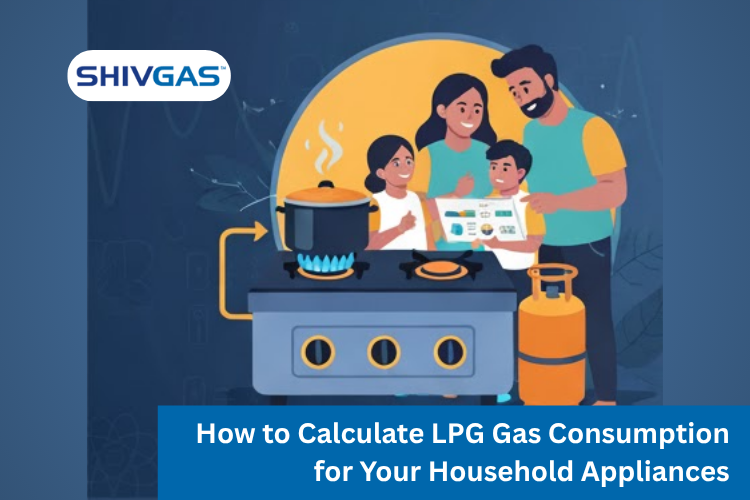
Did your LPG cylinder run out right in the middle of cooking? You’re not alone. Normally this can be because we don’t really know how much gas our appliances consume. This blog is your chance to crack the mystery of LPG gas consumption once and for all. Once you learn it, you’ll save money, plan smarter, and never be caught off guard again.
If there’s one thing which most households have in common, it’s the sudden panic when the LPG cylinder finishes without any kind of warning or indication. Someone might be left halfway through preparing a meal, or boiling water, or even heating their food on the gas stove, and suddenly, everything comes to a stop.
But let’s wake up to reality: this situation is avoidable. You can actually calculate how long your LPG cylinder will last, and the process is much simpler than you think. Knowing about your LPG gas consumption status not only helps you stay prepared in terms of planning when to schedule the next refill but also gives you transparency about your consumption bills and your daily routines.
In this guide, we’ll walk you through the basics of LPG, explain how it’s measured, and show you exactly how to calculate gas usage for your household appliances. Once you understand the math behind it, you’ll look at your LPG cylinder in a whole new way.
LPG is a clean, efficient, and versatile fuel which is composed mainly of propane and butane. It is stored in liquid form under moderate pressure and turns into a gas when released through your stove or other appliances. Because of its portability, it has become the preferred energy source in homes around the world.
One of the biggest advantages of LPG is its high calorific value. This means that it provides a large amount of heat energy per kilogram. For example, 1 kilogram of LPG contains around 46.1 megajoules (MJ) of energy. This is the number you’ll need to calculate your appliance’s gas usage.
Read More: How to Maximize Energy Efficiency with LPG’s High Calorific Value
Households normally use cylinders of 14.2 kilograms (common in India) or slightly larger sizes depending on their needs. To get an insight into your LPG consumption levels, you first need to know both the energy value of LPG and the input rating of your appliance.
LPG is a recurring household expense, and knowing how much you consume helps you plan better. When you can calculate how many hours a cylinder will last, you avoid last-minute surprises of running out in the middle of cooking.
It also helps with cost management. By keeping track of how much you use daily, you can allocate a monthly budget for LPG more accurately.
Another key reason is energy efficiency. If you notice that your consumption seems unusually high, it could mean your appliance needs servicing or is not operating at peak efficiency.
And lastly, smarter use of LPG contributes to sustainability, lower cooking fuel wastage, fewer emissions, reduced carbon footprint, and better alignment with eco-friendly living.
To calculate LPG gas consumption, there are three essential values you need to follow:
Indian households usually use 14.2 kg LPG cylinders while 17 kg/21 kg LPG cylinders for commercial purposes. Knowing the cylinder weight helps estimate how long it will last.
Every appliance has a “burner rating” or power rating given in kW (kilowatts) or MJ/hr (megajoules per hour). This figure shows how much energy it consumes per hour, which directly relates to the amount of gas consumed by a household cylinder.
The process of calculation is simpler than it sounds. Let’s start.
First, find your appliance’s rating. If it’s listed in kW, convert it to MJ/hr by multiplying with 3.6. For example, an LPG water heater rated at 5 kW would be 5 × 3.6 = 18 MJ/hr.
Second, divide this rating by the energy value of LPG (46.1 MJ/kg). This gives you how many kilograms of LPG the appliance uses per hour. In the case of our 18 MJ/hr water heater, the result is 0.39 kg/hr.
Finally, compare that number with your cylinder size to know how long it will last. For a 14.2 kg cylinder, divide 14.2 by 0.39, which equals roughly 36 hours of heater use.
This formula works for every appliance like stoves, ovens, geysers, or heaters. All you need to do is to connect it with the right numbers.
Let’s take three common appliances and work through some examples to make the process more clear for you to understand.
A typical 2-burner stove has a rating of 7 MJ/hr per burner. If you use both burners at the same time, that adds up to 14 MJ/hr. Dividing 14 by 46.1 gives about 0.30 kg/hr. That means one 14.2 kg cylinder would last about 46 hours of full cooking.
An oven with a 12 MJ/hr rating will consume LPG up to 0.26 kg/hr. With a standard cylinder, you get around 55 hours of baking or roasting.
As we calculated earlier, a water heater rated at 18 MJ/hr consumes about 0.39 kg/hr, giving roughly 36 hours of heating per cylinder.
In real life, we rarely use appliances non-stop. But these examples give you a reliable way to estimate your household LPG gas consumption.
The calculation gives you an accurate reading of the amount of fuel used, but your actual consumption can vary based on habits and conditions. For example, appliance efficiency plays a big role. Using older stoves with clogged burners often wastes gas.
Your cooking style also matters. Using a high flame unnecessarily burns more gas without always improving cooking results. Similarly, simmering food for hours will obviously consume more gas than quick cooking.
Another factor is maintenance. Well-maintained appliances burn fuel more efficiently and save you money.
Finally, weather conditions can slightly affect how LPG vaporizes, particularly in colder regions, although this is a minor factor for most households.
Small changes in habits can make a big difference in your overall LPG use. Just a few adjustments can expand your cylinder life noticeably:
These small steps help you cut down LPG gas consumption without compromising on convenience.
LPG is a non-negotiable part of daily life for every Indian household today. But instead of treating it like an unpredictable expense, you can use it wisely by learning how to calculate your LPG gas consumption. Once you start applying this knowledge, you’ll notice that your household runs smoothly, costs are more predictable, and you never face the stress of running out of gas unexpectedly. It’s a simple skill that makes a difference each and every day.
Ans. In cold weather, LPG vaporizes slightly slower, which can affect how efficiently your appliances burn gas. Also, you may use heaters or cook longer hot meals in winter, increasing overall consumption.
Ans. It could be due to high flame cooking, long simmering, or one of the burners not working efficiently. Check for clogged burners, leaks, or worn-out regulators that might be wasting gas.
Ans. Yes. Track the number of hours you actually run it and use the consumption formula (appliance rating ÷ 46.1 MJ/kg). This gives you a realistic estimate for occasional usage.
Ans. Add the gas consumption of both appliances per hour to get total hourly usage. Then divide your cylinder weight by this number to see how many hours your cylinder will last under combined usage.
Ans. In that case, you will have to change your cooking habits: use lids while cooking, pre-soak pulses, avoid unnecessarily high flames, and cook multiple dishes together. This will help you to save both time and cooking fuel.
Ans. This can happen if your appliances are inefficient, if there’s a leak, or if your actual usage exceeds the calculated hours. Tracking daily consumption over a week or a month will help refine your estimates.




Comment (0)