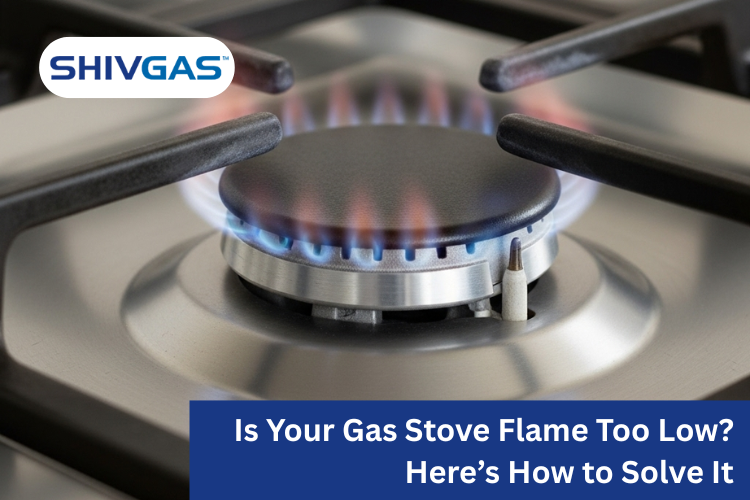
Have you ever stood impatiently by your stove, wondering why your tea is taking forever to boil or why your curry refuses to simmer properly? If so, you’re not alone. A low gas flame is one of the most common yet often overlooked issues in Indian kitchens today.
While it may seem like a minor inconvenience, the LPG gas stove’s low flame problem can actually point to deeper performance, maintenance, or safety concerns. Whether you’re trying to reheat leftover food, sauté vegetables, or cook a full meal, a weak flame delays the process and leads to undercooked food. More importantly, it may lead to a serious issue with your LPG gas stove setup.
In this blog, you will get an idea about the causes, fixes, and preventive steps for the low gas flame issue in LPG stoves. From basic LPG setup knowledge to advanced troubleshooting, this document has got it all covered.
LPG is a clean and highly efficient cooking fuel. It is normally used in domestic kitchens, particularly in urban and suburban households. It is mainly made up of propane and butane gas, stored under pressure in cylinders.
Let us know about the different components of an LPG gas stove.
Any disruption in this chain can cause low gas flame issues on the gas stove.
So, how will you know if you’re facing the LPG gas stove low flame problem? There are some common indicators that make you aware of the same.
If any of this sounds familiar, keep reading. You might be just a few steps away from fixing the issue.
The colour of your gas stove flame is one of the quickest ways to understand what is happening inside the burner. Many users focus only on flame height, but flame colour often provides deeper clues about gas pressure, airflow, and combustion quality.
A blue flame indicates proper and complete combustion. This means the gas and oxygen are mixing in the right proportion, allowing the stove to generate maximum heat with minimum gas wastage. A steady blue flame confirms that the burner ports are clean, airflow is adequate, and gas pressure is normal.
A yellow or orange flame is a clear sign of incomplete combustion. This usually happens when there is insufficient oxygen mixing with the gas or when burner ports are partially blocked by grease, dust, or food residue.
If you notice black soot on the bottom of utensils or dark tips on the flame, it indicates carbon buildup caused by prolonged incomplete combustion. This problem is often linked to heavily clogged burners, improper air shutter adjustment, or lack of regular cleaning.
Soot formation not only stains cookware but also reduces stove efficiency and can damage burner components if it is ignored for a long time.
Several day-to-day and technical reasons could be responsible for the low gas flame in your stove:
Food spills, grease buildup, and dust can block the tiny holes on the burner, which can reduce flame intensity.
Faulty regulators or nearly empty cylinders may minimize gas pressure, leading to a weak flame output.
The regulator controls the pressure and flow of gas. If it has become old or damaged, it may not deliver enough gas to the stove.
If the hose is kinked, damaged, or loosely attached, the flow of gas is restricted.
If too much air is mixing with the gas (or too little), it can disrupt the burning process and result in poor flame quality.
Before you book a service appointment or buy a new appliance, here are a few DIY checks and fixes that might restore your low gas flame:
Turn off the gas, remove the burner caps, and use a pin or fine wire to unclog the holes. Don’t forget to dry the parts completely before reassembling.
Take a close look at the rubber pipe connecting the cylinder to the stove. If it looks bent, cracked, stiff, or loosely connected, it can restrict gas flow. In many homes, replacing an old hose with a new ISI-approved one immediately improves the flame. Make sure the hose is not twisted or pressed against the wall.
Sometimes the issue is as simple as a loose regulator. Make sure it is firmly fitted onto the cylinder and locked properly. If the regulator feels old, damaged, or doesn’t sit tightly, replacing it is the safest option. A weak regulator can reduce gas pressure even when the cylinder is full.
If your stove flame has suddenly become weak, the cylinder might be nearing the end. A simple way to check is by gently tapping the cylinder. A hollow sound usually means it’s almost empty. Replacing the cylinder early can save you from sudden cooking interruptions.
Most gas stoves have an air shutter beneath the burner that controls how much air mixes with the gas. If this setting is off, the flame may turn weak or yellow. Adjust it slightly while observing the flame. When the mix is right, you’ll notice a steady blue flame. If you’re unsure, it’s better to stop and get professional help.
If the above fixes don’t work, it’s time to get a technician involved. Problems such as internal pipeline blockages or faulty valves must be addressed by certified gas appliance professionals only.
You should seek professional assistance if:
This is a common case in dual or triple burner stoves. If only one burner has a weak flame, swap the burners and see if the problem follows the part. If it does, the issue lies in the burner unit. If it doesn’t, you might be dealing with a blocked internal pipeline.
Prevention is always better than cure. Here’s how you can avoid future LPG gas stove low flame problems:
During winter or in cold climates, LPG gas does not vaporize as quickly, resulting in low gas flame performance.
You may also like: 3 Common Gas Stove Problems And Ideas How To Fix It
A gas stove low flame problem is a common issue, but it should never be ignored. It is often an early sign that something in the gas supply, burner, or airflow system is not functioning as it should. Ignoring it can lead to inefficient cooking, higher gas consumption, and potential safety concerns over time.
Whether you are cooking daily meals for your family or operating a small food business, a steady and healthy flame is essential for safe and efficient cooking. If your stove starts flickering, producing a weak flame, or taking longer than usual to cook food, it is best to inspect the issue at the earliest.
Most low flame problems can be resolved with simple checks and regular maintenance. However, if the issue continues despite the basic DIY methods, seeking professional assistance is the safest and most reliable solution.
Ans. A sudden drop in flame can be caused by a partially closed regulator, an almost empty gas cylinder, clogged burner holes, or a loose hose connection restricting gas flow.
Ans. It may be the burner holes get clogged with grease, the burner cap might not be fitted properly, or the air–gas mix may be shut off. Sometimes the problem isn’t the stove at all but the aging regulator or a rubber hose that’s started to harden. Replace them as soon as possible to resolve the low flame issue.
Ans. Turn off the gas supply, remove the burner caps, and clean the holes using a pin or brush to remove debris. Wash with warm soapy water, then dry and reassemble.
Ans. No. A yellow or orange flame indicates incomplete combustion, which can release carbon monoxide. This should be addressed immediately by cleaning or checking the gas-air mix.
Ans. For optimal performance and safety, it’s recommended to clean burners monthly and have your stove, hose, and regulator professionally checked at least once a year.






Comment (0)