Energy demand continues to rise as households expand and industries scale their operations. You depend on fuel not only for basic cooking and heating but also for maintaining productivity in commercial and industrial environments. As a result, selecting the right fuel is no longer a simple choice. It directly affects operational efficiency, long term costs, and environmental impact.
Traditional fuels such as coal, kerosene, and firewood have been widely used for decades, yet they often produce higher emissions and inconsistent heat output. In comparison, Liquefied Petroleum Gas or LP gas has gained strong acceptance because of its controlled combustion, high energy value, and cleaner burning properties.
If you are assessing fuel options for daily use or evaluating opportunities in the LPG gas dealership sector, it is important to understand how LPG performs from a technical and practical standpoint. The following sections explain the advantages of LPG so that you can make a proper decision.
Before understanding the LPG benefits, you should know how LP gas functions as a fuel.
LP gas mainly consists of propane and butane. These are hydrocarbon gases produced during natural gas processing and crude oil refining. Both gases are suitable for combustion because they ignite easily and produce steady heat when mixed with air in the right proportion.
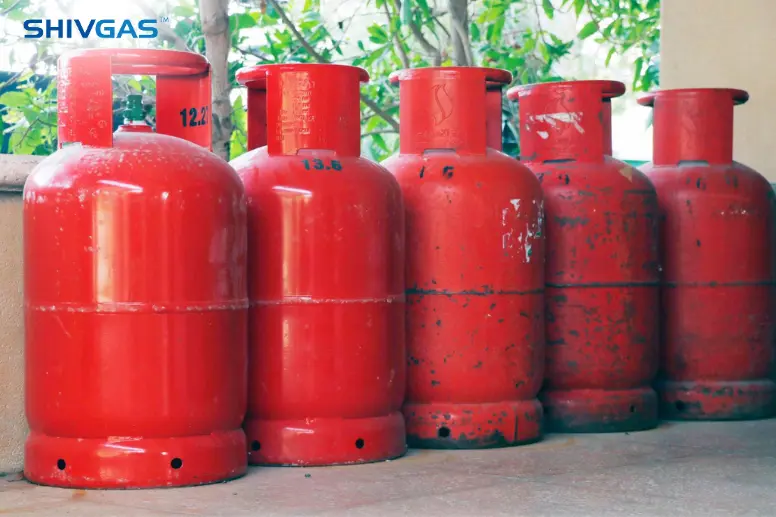
LPG is stored in liquid form under pressure inside cylinders or tanks. When you open the regulator, the pressure drops and the liquid converts into gas. This gas then mixes with air and burns.
Because LPG can shift from liquid to gas easily, it allows large quantities of fuel to be stored in compact containers. This makes storage practical and transport convenient.
The advantages of LPG are not limited to surface-level benefits such as clean burning or high heat. Its real value lies in combustion chemistry, energy density, system efficiency, storage physics, and operational predictability. Here are 10 advantages of LPG gas.
LPG delivers high calorific value per unit mass, but the real advantage lies in how efficiently that energy converts into usable heat. Because LPG vaporizes rapidly and mixes uniformly with air, combustion is more complete compared to solid fuels. This improves thermal transfer efficiency in burners and heating systems. In practical terms, more of the fuel’s stored energy becomes usable heat rather than being lost through incomplete combustion or residue formation. Over time, this improves energy utilization across both domestic and industrial applications.
Unlike biomass fuels that vary in moisture content and composition, LPG has a standardized chemical structure. This consistency ensures predictable flame temperature and combustion characteristics. Predictability matters in industrial operations where temperature stability affects product quality. Whether in metal heating, food processing, or ceramics, stable combustion reduces variability in output. Consistency in fuel behavior allows better process control and fewer performance fluctuations.
One of the less discussed advantages of LPG is its impact on long-term heat transfer efficiency. Solid fuels leave carbon deposits that insulate heating surfaces and reduce thermal conductivity. Over time, this lowers system efficiency and increases fuel consumption. LPG produces minimal soot and no ash. As a result, burners maintain cleaner surfaces, and heat transfer remains efficient for longer periods. This reduces gradual performance loss that often goes unnoticed in solid fuel systems.
Fuels containing higher sulphur content can generate corrosive byproducts during combustion. These byproducts accelerate wear inside burners, chimneys, and heat exchangers. LPG contains negligible sulphur, which significantly reduces corrosive stress on equipment. Lower corrosion rates extend system lifespan and reduce long-term maintenance costs. This advantage becomes particularly important in commercial kitchens and industrial facilities operating daily.
LPG systems respond instantly to control adjustments. This is not merely about convenience. Immediate responsiveness improves process accuracy. In temperature-sensitive industrial applications, delayed heat reduction can damage materials or alter production quality. LPG allows rapid modulation of flame intensity, giving operators direct control over thermal output. This reduces process errors and improves operational safety.
LPG’s ability to exist in liquid form under moderate pressure allows significant energy storage within compact cylinders. From a logistics perspective, this reduces storage footprint per unit of energy compared to solid fuels. High energy concentration simplifies supply chain management. It also lowers transportation frequency for the same energy demand, improving distribution efficiency in commercial operations.
LPG does not depend on centralized pipeline networks. This structural independence increases deployment flexibility. Industries in semi-urban or remote regions can operate without large infrastructure investments. Fuel access becomes a logistical task rather than a civil engineering requirement. This flexibility expands operational possibilities in geographically diverse locations.
Indoor combustion of biomass fuels releases particulate matter and organic compounds that affect respiratory health. LPG produces significantly lower particulate emissions when burned correctly. While still a fossil fuel, its cleaner combustion profile reduces indoor air contamination risk in enclosed kitchens and workshops. This advantage improves occupational safety conditions.
LPG combustion does not require grid electricity. Even in power outages, LPG-based systems continue functioning. In commercial establishments, this ensures service continuity. In manufacturing settings, it reduces downtime risk. Operational continuity is not just convenience; it directly protects revenue and production schedules.
Few fuels offer the same level of application flexibility as LPG. It supports residential cooking, commercial food production, metal cutting, glass manufacturing, ceramics processing, textile operations, and automotive fuel systems. Its adaptability comes from stable combustion temperature and controllable flame characteristics. A single fuel serving multiple industries simplifies energy planning and procurement strategies.
If you cook every day, you know how important steady heat is. When the flame responds exactly the way you adjust it, cooking becomes easier and more controlled. LPG gives you that stability. It lights quickly and maintains consistent heat from start to finish.
In both home kitchens and commercial setups, this steady performance matters. When your fuel behaves predictably, you focus on the food instead of the flame. That practical reliability is why LP gas continues to remain a preferred cooking fuel.
You can also read: Advantages Of Using LPG For Your Home
Yes, LP gas is safe when you install and handle it correctly. You should always use certified regulators, check for leaks regularly, and ensure proper ventilation in your kitchen. Because an odorant is added to LPG, you can quickly detect leaks and take action immediately.
LPG is more efficient than wood or kerosene because it burns with a stable flame and produces higher heat per kilogram. You get faster cooking and better flame control. Since it burns with minimal residue, more of the fuel’s energy converts into usable heat.
Ans. Yes, you can use LP gas for both household kitchens and commercial setups. The same fuel supports small domestic stoves as well as large commercial burners. Because you can scale cylinder size and storage capacity, it adapts easily to different cooking demands.



Comment (0)